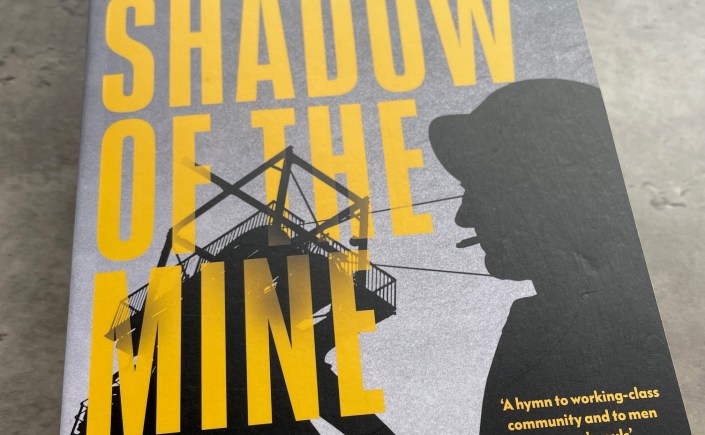
It was good to see the paperback edition of The Shadow of the Mine. It includes a postscript from us that looks back to the strike of 1984-85 as a major turning point and forward to the prospects of a decarbonised economy. In this “green transition” the ending of the coal industry (and the fates of the coal miners) can be seen as significant and perhaps a guide to the prospects of the other workers in the carbon economy. We write more about this in the current issue of Red Pepper (we will link directly when the page becomes live).
The automobile industry is a good example. With its reliance on the internal combustion engine (ICE) it stood alongside coal as a central part of the carbon economy. Its dismantling could prove as tortuous as the removal of coal mining. In the UK it was planned that all sales of new ICE vehicles would cease by 2030: a boldness matched by a remarkable lack of preparedness, cut adrift from the rapid changes that had taken place in the industry this century. Reality dawned recently when the “planned” date was pushed back to 2035.
Electrical vehicles (EVs) differ significantly from those powered by the ICE. With 90 per cent fewer moving parts they are simpler to make. This lead the Ford company in the US to question whether existing workers needed to move into the new production system. The locomotive power of EVs comes from the rechargeable battery for which nickel and lithium are key components. These are located, like coal, underground – mostly in South America and Africa, and particularly in the Democratic Republic of the Congo. Many of these reserves have already been acquired by Chinese companies. Andy Palmer, the man who brought Nissan’s LEAF EV into production in the UK explained the significance of all this when he said that ‘China owns that supply chain’.
China now overwhelmingly dominates the manufacture of batteries and recently of EVs too. In this, one company BYD (‘Build Your Dreams’) is dominant. Set up as a battery producer in 1995, it expanded rapidly and with government support has emerged as the world leader, outselling Tesla in China and fully prepared for a major export drive. In the face of this the interventions by the British government seem pathetic, with the British Volt saga standing out as an example of what not to do. There seems little awareness of the scale of the threat . This was amplified when BYD announced that it had no plans to manufacture batteries in the UK.
Forty years ago the Ford Motor Company in the UK, introduced a new calendar called AJ – After Japan – based on the threat it faced from companies like Toyota. Today maybe another change would be in order to AC – After China. Nissan seems to have already accepted this in making a partnership deal with another Chinese battery producer Envision which will provide batteries for 100,000 more EVs a year. BMW has announced that it will be making the Mini EV in China (while also undertaking some production in the UK to circumvent tariffs for the USA market). In response the Biden administration in the USA though its oddly named Inflation Reduction Act, sanctioned enormous subsidies aimed at bolstering the domestic manufacture of batteries and EVs
In 2023 Ed Miliband endorsed a weak form of the US approach and talked of a ‘green prosperity plan’ to deliver a multi-billion investment by government and businesses. He said ‘Joe Biden wants the future Made in America. We want the future Made in Britain’. It sounded hollow then and with the ditching of the plan, more so now.
The coal industry was dismantled with abrupt haste and little concern for the people or their futures: this was left in the hands of the market and hopes of inward investment. There was no serious strategy for a meaningful transition to a new kind of green economy. Today, facing a further change of epic proportions we are no better prepared.
This year I have been saddened and disorientated by the loss of five of my close friends three of them I had known for 50 years and more. The loss of a friend takes away something of yourself. It was Aristotle who said that a good friend was your second self through whom you discovered ways in which you could become who you were. The loss therefore is quite considerable, and a part of old age. However – on we go!
I’m now looking again at the idea of a photographic book and gaining a sense of optimism from the photographs and the memories that they bring back about the time when I was working closely with the coalminers in Durham. One of them, David Temple, the face electrician who became a significant writer, Marxist and chronicler of working-class life on the Durham coalfield, was one of those who died. Appropriately he, like Karl Marx, died working at his desk. I have written a short piece about his life:
David Temple 1945-2025
Like many others I was shocked by the news of David Temple’s sudden death. A quiet but determined and passionate man he had, through his writings, hard work and research become a central figure in the movement that celebrated the culture of mining communities in the North. He has left his mark in the renovation of Redhills the old NUM headquarters and its transformation into a fulcrum for the continued care and development of the places so badly affected by coal mine closures. His energy and thoughtfulness will be greatly missed.
David was born in Bishop Auckland in 1945 and spent his early childhood in the town he remembers as being “black: everything was just black”. Such was the dominance of the coal industry, and with it trade unionism and politics. His father was a schoolteacher, and a transfer of employment took the family to Sunderland where David completed his secondary education in the same school as the late Davie Hopper. It seems that on one occasion they came to blows in the playground and 50 years later he reminded the then General Secretary that he had been a “very dirty fighter”.
In this time, he retained his links with Teesdale and his love of the outdoors, cycling and fell running. Yet when thinking back to his early life David remembered one thing with clarity – that he came from a very political and left-wing family with his father and uncles in different parties and political groups with argument never far away and always around the table at family get-together. He would say that he could not remember a time when he didn’t have a political view, and it was of the Left. In 1964 he joined the Socialist Labour League and with its reformation as the Workers Revolutionary Party was persuaded to stand as a candidate at Houghton-le Spring in the 1979 general election. By that time, he had become close political friends with. the ex-miner and sociologist Cliff Slaughter who had co-authored the famous study Coal is Our Life based on Featherstone in Yorkshire. Cliff encouraged David to write, and this led to the publication of his influential pamphlet British Miners and the Capitalist Crisis which anticipated the conflicts that would lead to the strike on the coalfield in 1984-85. By the time of the strike and following the crisis in the leadership both men had left the party believing in the need for the humanisation of Marxist theory and a “refoundation” of the working-class movement from below, something that fitted more easily with David’s personality and way of life. It became his mission. While retaining a strong internationalism through his links with miners in Ukraine and South Africa his main focus and energy was directed towards the mining communities of Durham and Northeast England.
At the end of the fifties the coal industry was in dramatic decline and David obtained an apprenticeship with the electricity board, remaining with them until 1973 when he successfully applied for a job working underground at the Murton colliery There, he became known as a conscientious face electrician an active and well respected. member of the Durham Colliery Mechanics Association, and a man of Murton, with a significant voice across the coalfield. He was a strong advocate of discussion groups and education and sponsored these at Murton, where, to no surprise, in 1984 the Mechanics lodge there voted to support the strike, picketing out the miners!
I took this picture of David Temple at a meeting of the Wearmouth pickets, 21st August, 1984.
The strike of course was a major event and a standout moment in the history of British mining and the working-class movement. David was centrally involved, he was at Orgreave and at the Easington and Wearmouth pickets, spending 24 hours in jail as a consequence. Reflecting on this at the time, he observed that it was one thing to think about the capacity of the state to turn against the workers but another to experience it directly. It was a very disturbing time drawing attention to the ways in which police violence influenced the course of the conflict. By the August, after the failure of the talks between the union and the NCB, it seemed clear to him that the Thatcher government was not going to allow a settlement; it was determined to teach the miners a lesson. This proved to be true, and the punishment continued when the miners returned to the collieries where policies were introduced to back up MacGregor’s promise that they would discover “the price of subordination and insurrection”. David himself, as a known activist, was allocated to work with a man who had broken the strike. He spent a year of silence in the mine.
As the strike drew to a close, there was concern for the many miners who had been sacked by the NCB, often as a result of quite minor infringements, now facing unemployment. One of these was a close friend of David’s and, thinking of a practical and political solution, he approached his bank manager for a loan. This was to set up a small printing workshop where his friend and others could have a job. He planned to purchase a building in the run-down dockland area of Newcastle and, after inspection, and convinced by David’s passion and assessment of the future market, the loan was agreed, and the Trade Union Printing Services (TUPS) workshop was up and running. The new leadership of the Durham Area of the NUM agreed that the new Brochure of the annual Gala or Big Meeting, would be printed at TUPS and that David would write and edit the content. With the closure of the mines, the Gala changed and the brochure reflected and amplified this. What was once a reliable but rather bureaucratic annual report becoming transformed into a colourful reflection of the life and history of the union and the local communities, many of them collectors’ items.
After the predicted closure of the Murton mine in 1991 David transferred to Easington, staying in the industry until its final closure in 1993. The next thirty years turned out to be dramatic ones with coal remaining very much alive in his political life, in his memories and in his development as a writer and historian. These concerns drove him forward, delving into archives, following leads and talking with people, in the development of original research. Over a period of twenty years this led to series of books and booklets from TUPS Press, each of them filled with detail and informed by a coherent understanding of the processes that accompanied the development and ending of coal mining in Durham county.
The Collieries of County Durham: Volume 1 and 2 contained a social history of each of the mines and the villages around them. The entry on Easington, for example, contains some of the greatest detail available on that mine and on the explosion there in 1951. This collection was followed by Above and Below the Limestone: The Pits and People of Easington District which gives a remarkable view of the area’s development through and within mining and the ways in which trade union activity also evolved. It was accompanied by The Durham Miners’ Millennium Book, which took a broader and more extended view, providing a readable, informed, illustrated account of mining trade unionism in Durham, and containing a personal and detailed account of the uprising that took place in Easington colliery in August 1985. He followed this with an extremely detailed and revealing examination of the lives of the men and women involved in the history of Boldon, one of the area’s most famous collieries. Boldon Colliery: A Proud Heritage was another considerable achievement. Taken together, these books make a unique and substantial contribution to mining history in the north of England.
To them can be added his most successful book: The Big Meeting: A History of the Durham Miners’ Gala a sweeping historical account of the event held in Durham on the second Saturday of July. It was published through the support of hundreds of subscriptions and became a hugely popular success (going into a second edition in 2021) and reflected the deep affection he and others felt for the Gala. It was there that he and Jean first met, an encounter and lifelong marriage, that in many ways typified the significance of the Big Meeting within Durham mining culture. However, the closure of the mines threatens the Gala’s future. Without the miners’ wages, and with the trade union’s resources already depleted, it seemed like a huge struggle. But the trade union leadership was determined to keep going and after important financial support from the philanthropist Michael Watt, they found in Dave Temple one of their strongest supporters.
During the strike David had learned the language and politics of necessity. He had been instrumental in setting up the Save Easington Area Mine organisation (SEAM) and he valued its independence with its strong focus on local needs. Once the kitchens were up and running, he was confident that the strike could hold and endorsed the slogan “they shall not starve” . He felt the same way about food banks. It was wrong that they were needed but they were necessary for people to survive. So too with the Durham Miners’ Gala: it was absolutely necessary if any semblance of community solidarity was to be retained and built on. As such he came up again with the idea of subscriptions linked to the Friends of the Durham Gala – “The Marras”- a network of committed supporters who would make annual payments in support of the event. The miners’ Gala continued to flourish and became fully transformed from a local trade union meeting and celebration into a national labour and community festival. David was centrally involved in this development and saw in it the inheritance of the strike and the justification for its longevity. As he wrote to me on the 30th anniversary:
“I often think how poorer our lives would have been without that year if we had just faded away without a fight, I am sure there would now be no Gala to boost our sense of well-being each year. But more importantly it has become a symbol of resistance and a rallying point which is quite extraordinary”.
It was on the back of this success and the increasingly national coverage given to Durham and its mining communities, that the transformational Redhills project was launched with Dave at its very heart. In his mind it was absolutely necessary to retain the building as a focal point and historical lightening rod to the power of mining trade unionism and the communities that created it. Here was an opportunity to link the development of socialist ideas, with the strong cultural features – vernacular and musical – of working-class community life in the North. While Redhills would sit at the centre, these communities had of necessity to be pivotal to the way the project developed. At one meeting, when asked what the aim of the project should be, he answered that it should provide clear and material benefits for the old mining communities, for only in this way could it retain and build legitimacy as a social movement from below. He has left this as a legacy; and one to be built on.
Over the last eighteen months or so, as I have read and watched accounts of the coal miners’ strike, I have reflected on my own time on the coalfields during that year. I was based in Durham and had been involved in research and teaching programmes in the mining communities, which continued up to and during the strike. I was quite heavily involved in evening meetings built around the “Campaign for Coal” initiated by the NUM which has largely been forgotten. Also, to me, many of the emphases seemed to be not quite right; they didn’t feel like it felt like back then. So much so that I found myself mouthing the words of Max Boyce: “and I was there!”
Issues like these led me to start once again rummaging through the many files and boxes I have kept marked “Miners’ Strike”, aiming to check out one or two of the historical facts and to check on some of the notebooks that I had kept. Then I made a very unexpected discovery. Inside one of the boxes, I discovered an envelope containing over 300 negatives of photographs that I had taken in the communities during 1984. I had completely forgotten about these to the extent that, when asked, I would say that I had not taken any photographs during that year. But obviously I had.
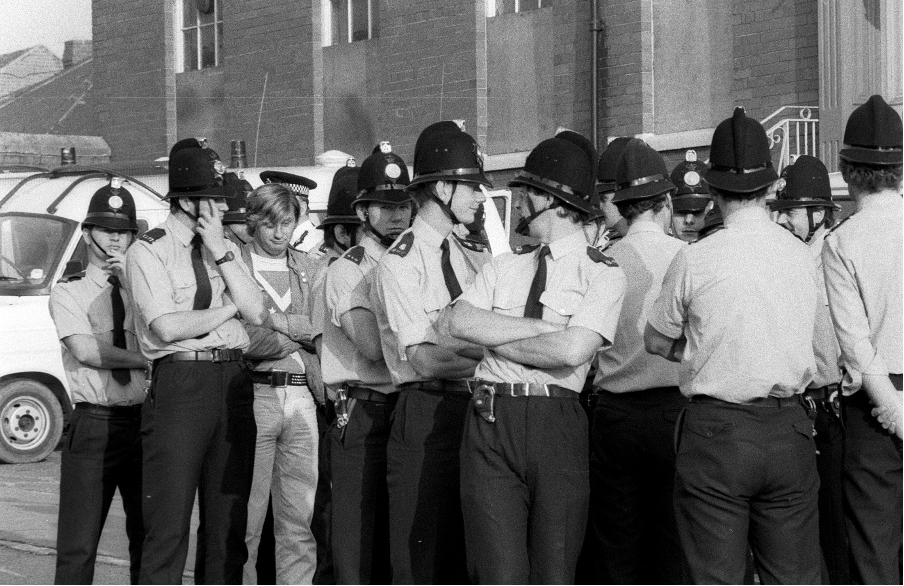
Most, but not all of these, were in Easington, where I had a base, and I was there In August when the unity of the strike in the colliery was being broken by one man, bused in from a village in the centre of the county. What followed was documented brilliantly by Keith Pattison who arrived there after the riot and saw the full extent of the reenforced police presence and the harsh crack-down. His photographs have become legendary.
Keith had been commissioned by the Side Gallery to photograph the events as they unfolded. At the time I felt that I was one photographer too many and that I should let the professional take over. I wrote some text for Keith’s exhibition, and this was published as a brochure (Easington 1984). More recently Keith has published his photographs in his wonderful book (No Redemption) with text from David Peace.
Keith and I became very good friends and, unsurprisingly I talked with him about the negatives. I thought they would bring back memories for him too. He scanned them into a digital format and told me that they were important and that I had to publish them as a book. This was obviously nice to hear and encouraging, although I was daunted by the idea of a book.
I have been spending a lot of time looking though the photos, organising them by place and time and thinking how best I could write alongside them. Many years ago, I worked with another photographer, Nick Hedges, writing a text for the book Born to Work. (see Media – Huw Beynon). I wondered whether I could follow the style I used there. The situation is different of course because here we follow a story as it unfolded, drawing on my notebooks. Also, as I took the photographs, the story is about me as well – me and what I was doing there. In spite of these differences, I felt that Born to Work was an example that I could follow, using text to draw out the wider issues that lay inside and behind the photographs them at the time while remembering how I felt at the time
Here, I thought that I could put together some themes that may be of interest
Young Men
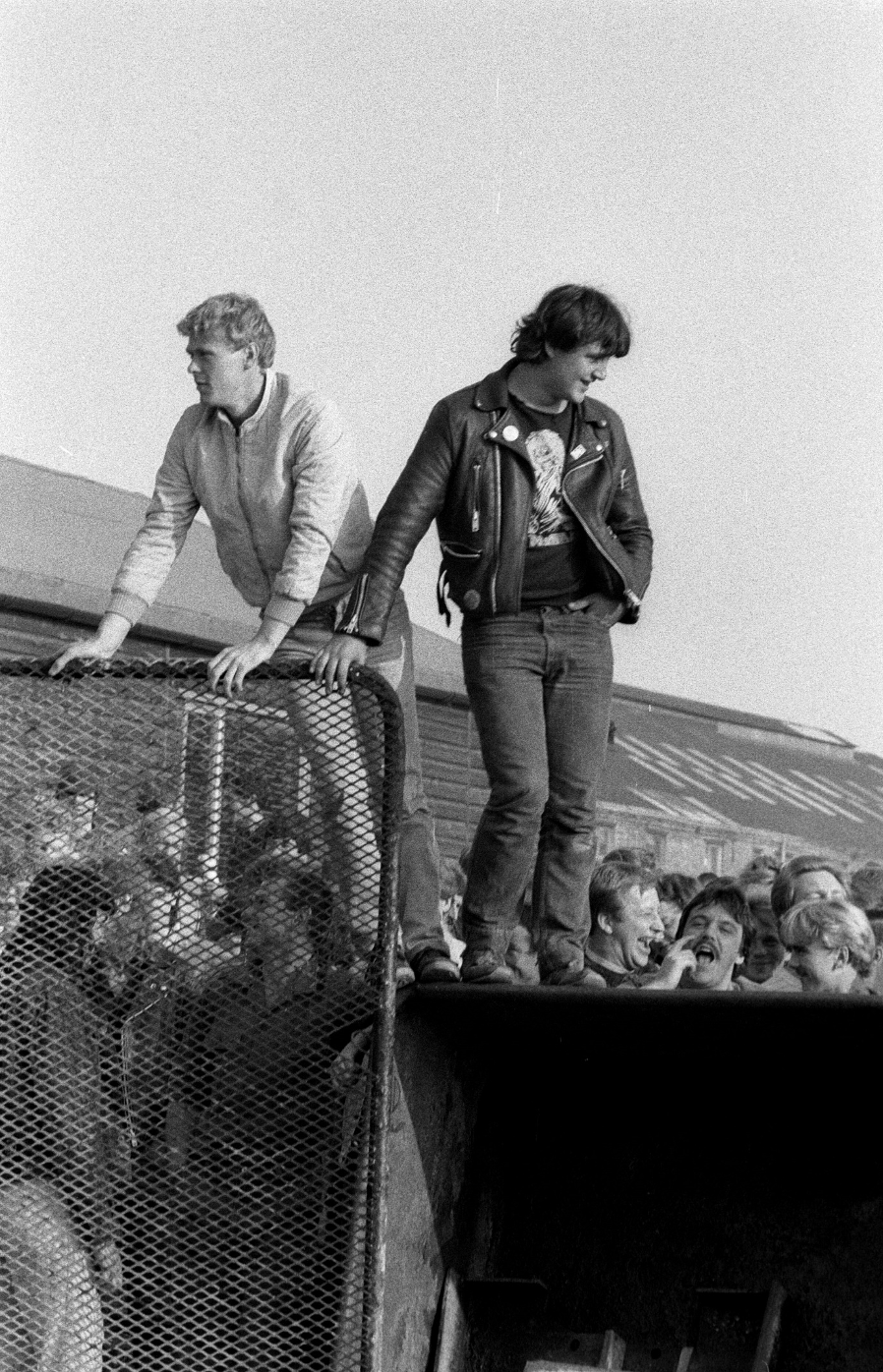
From the very beginning I was struck by how young many of the coal miners active in the strike were. This was made clear from the very beginning at the gates of the miners’ headquarters in Durham when a decision was being made strike or no strike. They talked to me about the strike in 1972, all of the stories that they had heard of it, and they were looking forward, with excitement, to being on strike. They were also looking forward to a full life, working underground, as miners. During the strike, those of them who were single would be without any means of support. They came to rely on “the kitchens” organised by the women of the villages for their daily meals.
Rallies and Togetherness
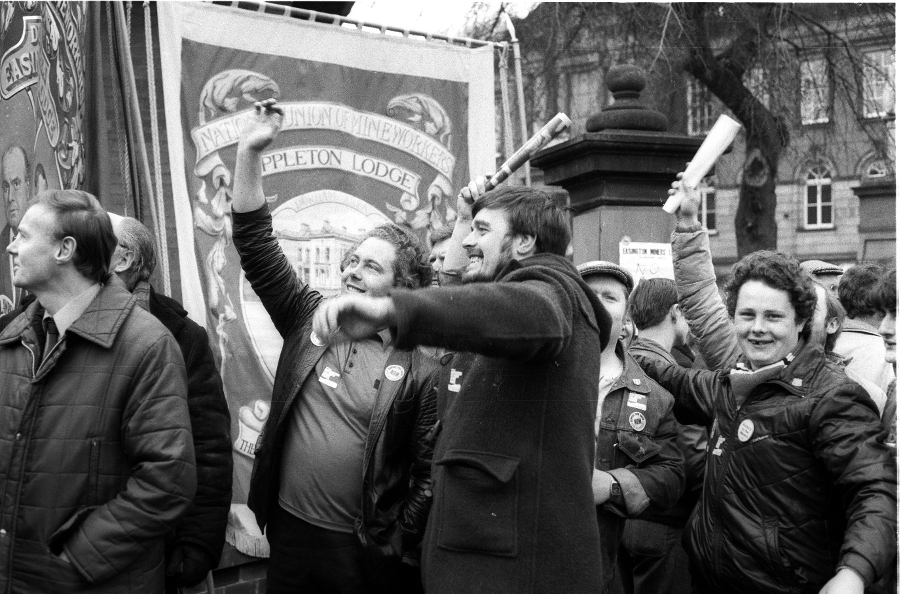
Throughout the summer there were conferences at Sheffield, picketing in Nottinghamshire and then at the Orgreave coke works. Support groups were established in the coalfields and pit villages often with kitchens providing cooked meals. There were also rallies, meetings and events. All too many to summarise or easily capture. During July, while key national negotiations were taking place, there was a rally in Durham every weekend. These were important in maintaining morale across the coalfield and revealed the extent to which women have become centrally involved in the strike.
Breaking the Strike in the North
The national talks centred on the NCB’s idea of maintaining collieries in possession of “beneficial reserves”. This was rejected by the NUM leadership. What followed was a concerted attempt to break the strike. Through a national campaign beginning in North Derbyshire and extending to Scotland and then the North East, managers were contacting striking miners – most often those living away from the collieries and travelling to work by NCB coaches – encouraging them to go back to work, offering them protection from abuse.
On the first Monday there was a relaxed feeling at the giant Easington colliery, with the lodge officials confident than no one would be breaking the strike. The calm was broken by the arrival of Gordon Parnaby with his car lights flashing. Someone was coming. One man – Paul Wilkinson – was on the bus. He had worked at the East Hetton colliery at Kelloe before moving to Easington after it closed. The Kelloe village was solidly behind the strike and Gorden explained; “he worked at the pit but he’s not a Kelloe man. He’s from Bowburn” and he was on the bus as it arrived in the village, now heading for the colliery at the coast. All efforts were made to “defend our pit” with barricades and weight of numbers. But Wilkinson was smuggled in through the back door and chaos ensued.
It has been six months since our lovely dog Jack died making me sadder than I could ever have imagined. It’s a sadness that has stayed with me. When Jack joined us, here on the farm, he was three months old, rescued from an unhappy home life in the city. My thought then was that we would grow old here together: which we did. In that time, we shared each other’s company; being together all day, almost every day. Now I still experience him as an absence: a deeply missing, and complex, presence. For my friend Jack was many things to me. As one of my friends put it: “you have lost a brother”. He had been unwell for some time and was diagnosed with a tumour in his throat making it increasingly difficult for him to eat and to breathe. In the end, and to save him from an awful death, we had to call in Bernice Fitzmaurice, the one vet he trusted. It was a terrible day.
Jack loved the farm with its field and ponds. But he would never roam alone. Daily he would stay on the yard before going off with one of us. John Berger has written of how walking with a dog adds a new dimension to the experience of the countryside. When walking, Jack would turn his head to check that I was following while I, always aware of his capacity for chaos, would be on alert too. Jack never barked. He communicated with his eyes and his tail! If there was something that he wanted he would stand still and stare. He would do this if he wanted to go out – just stare at the door. One day when we out in the fields he stopped and looked toward a hedge. I could see nothing and wanted to walk on, but he stayed, transfixed, until I returned and looked carefully in the direction of his gaze. There I found a cow trapped in a ditch and in real trouble. She made no sound and I hadn’t seen her. I phoned the farmer and she called back later thanking me, saying that they would never have spotted her where she was, and that I had saved the cow’s life: “Not me”, I said. “It was Jack”.
Jack was a terrible scavenger. Left to his own devices he would dig and dig, following a scent in the hope of finding some poor creature that he could eat. On one occasion this urge was to be his downfall.
Eight years ago, I wrote a blog about Jack called: “My Dog’s Got What I’ve Got”. It was a story about how we came to discover that this springer spaniel and I both suffered from the same rare autoimmune condition called Addison’s Disease controlled through steroids. I explained how this mutuality was sometimes helpful. For example, he always knew when our tablets were due, We took them at the same time and wrapped his in chicken, which he loved, so he always remembered “tablet time”. Equally, my understanding of the disease helped me spot signs of things going wrong with him. So, one afternoon when I found him in a state of collapse, I immediately assumed that this was an Addison’s crisis for which he needed emergency doses of prednisolone. In these circumstances he normally complied easily, but this time he refused. In desperation, I managed to press tablets into his mouth, before he resisted and closed his jaws tightly around my hand sending blood everywhere! So, while Helen rushed Jack to the emergency vet, I was at the hospital’s A&E centre, in pain and wondering if Jack would survive. He did, but only just. It turned out that I had been mistaken. It was not an Addisonian crisis, but a severe case of pancreatitis. That explained everything to me. I knew what pancreatitis was like and that he would have been beside himself in complete agony. That was why he resisted the tablets and damaged my hand. I also knew that this had been an occasion when our alertness for signs of Addisons’s Disease – a notoriously deceptive condition – had taken us down the wrong path.
It was a worrying time visiting Jack in the vet hospital knowing that it was touch and go. In the end, after four days, he had recovered enough to go into a regime of non-cooperation, refusing to eat, frustrating the staff. He wanted out. We were told that we had to take him home. Back on the farm he ate and ate again, his appetite restored. He was home and on the road to recovery while leaving the root cause of the crisis unresolved. The vets were certain that it had been brought on by a diet of fatty foods, but knowing what we fed him it made no sense to us. Nothing made sense. That was until we thought about the bird feeder and the tubes of fat balls with Jack sitting underneath. The scavenger! No more fat balls and for Jack life on a fat free diet.
Jack loved company and rejoiced with the various arrivals to the farm. In his early years he would wag his tail, lie on his back, and if his tummy was rubbed, he would wee up into the air. People soon learned about that one. But he never lost the capacity to lie and sleep on his back – sometimes looking up at you from under his nose. He was always welcoming (even with burglars? we wondered) and remembered the differences between our range of visitors, his tail always wagging.
Our vet Bernice who had followed Jack closely was touched by his good nature and endurance given all that he had been through. As a young dog he had climbed to the top of a hay stack in the barn, it collapsed and he fell to the floor, breaking his right front leg in two places. The surgeon told us that 80% of the dogs who came to him with this injury were Springers! His leg was repaired and after many weeks of walking him on a lead he was back to his normal self, careering around our fields. However, we were warned of impending athritis as he got older, and this came to pass in that leg and others, and this began to take its toll. Some time back Helen observed me taking off my boots and putting my socks up onto a radiator out of reach: “there’s no need to do that” she said “– Jack doesn’t steal your socks anymore”. We laughed and recognised that he had indeed slowed down, and arthritis played a big part in this, requiring pain killers as he aged with me helping him upstairs and into the car. In these later years he also became slightly deaf and soon after that (ironically) he learned to bark! I came to communicate with him though hand signals which worked pretty well and which he also interpreted though his awareness of my eccentricities. He would always respond to my signal to “move on” except when I directed it toward the house – indicating that we were going in. On these occasions he would wait to see if I took my cap off; only then was he sure that I wouldn’t change my mind!
By this time, and following on from the pancreatitis scare, we had agreed that Jack’s medication would be delivered though six weekly injections rather than by tablets. This would give him back-up in case of any crisis and also remove any risk of under-dosing. As the need for pain relief increased this was also delivered by regular injections which meant that every six weeks, Jack and I would make the trip to the vets in Ebbw Vale. He knew where we were going and didn’t like it but did so obediently and without fuss. He would arrive, sit on the scales to be weighed and then enter the consulting room with me. On one of our last visits, Bernice was accompanied by a student who had been informed that “this is the dog that wants to go as soon as he arrives”. True to form, we entered, he wagged his tail and turned toward the door jamb.
During the COVID we had to lock down and that was a bad time for Jack, and us all. He missed the coming and going and the different people he could entertain. Deliveries continued though and we began to have building work and help with the fencing and Jack was out and about again. Now they ask “where’s that dog?” “Where’s Jack?” One of them knew Jack well and described him as “a real gem” others talked of him being a “one off “and a “beautiful dog”. He was all of those things and he meant such a lot to so many people. Dogs have that capacity.
When I was hospitalised after prostate cancer surgery some years ago Helen brought me a small soft toy dog – brown and white- to keep at my bed side. She felt that an image of “Jack” would help me through. Slightly embarrassed, I was relieved by the general support from the men on the ward. In the ensuing conversation one man, who had working in the Penallta colliery spoke eloquently of the time when he was seriously ill and how his dog had pulled him out of depression. There was agreement that dogs were something special and an integral part of family life. This seems to have been recognised by hospitals where increasingly requests for dogs to visit seriously or terminally ill patients are being viewed sympathetically.
This reminded me of the small research project we on did some years ago on the close friendships of elderly people in which they were asked to place themselves at the centre of a circle with their contacts marked in order of closeness – close contacts near the centre, moving outwards to the periphery. Often, we were asked if animals could be included. When they were, they were invariably located close to the centre. This research came to my mind during my last visit to the vet with Jack. I had left him with Bernice for a procedure to determine the nature of the lump in his throat. Looking somewhat glum and tearful I was supported by a sympathetic comment from a woman in the waiting room: “they are part of the family aren’t they” she said… I replied too quickly and perhaps carelessly “Yes they are: Sometimes more than that too”. She seemed startled but then agreed: “Yes; they are there all the time aren’t they. And the love too”.
Jack was certainly part of our life here and will never be forgotten. Our beautiful boy.
In 1979 at a time of great social and political change I was living in Durham. I was closely involved with the coal miners and the NUM, and also with a group called “Strong Words” that we had set up to record and publish the words and images of working-class people in the North East of England.
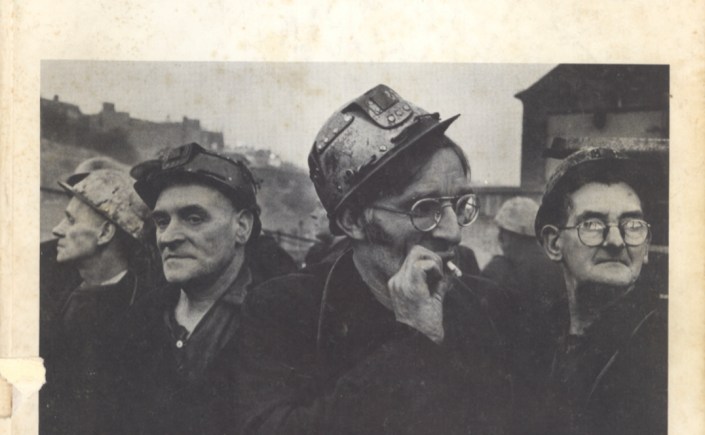
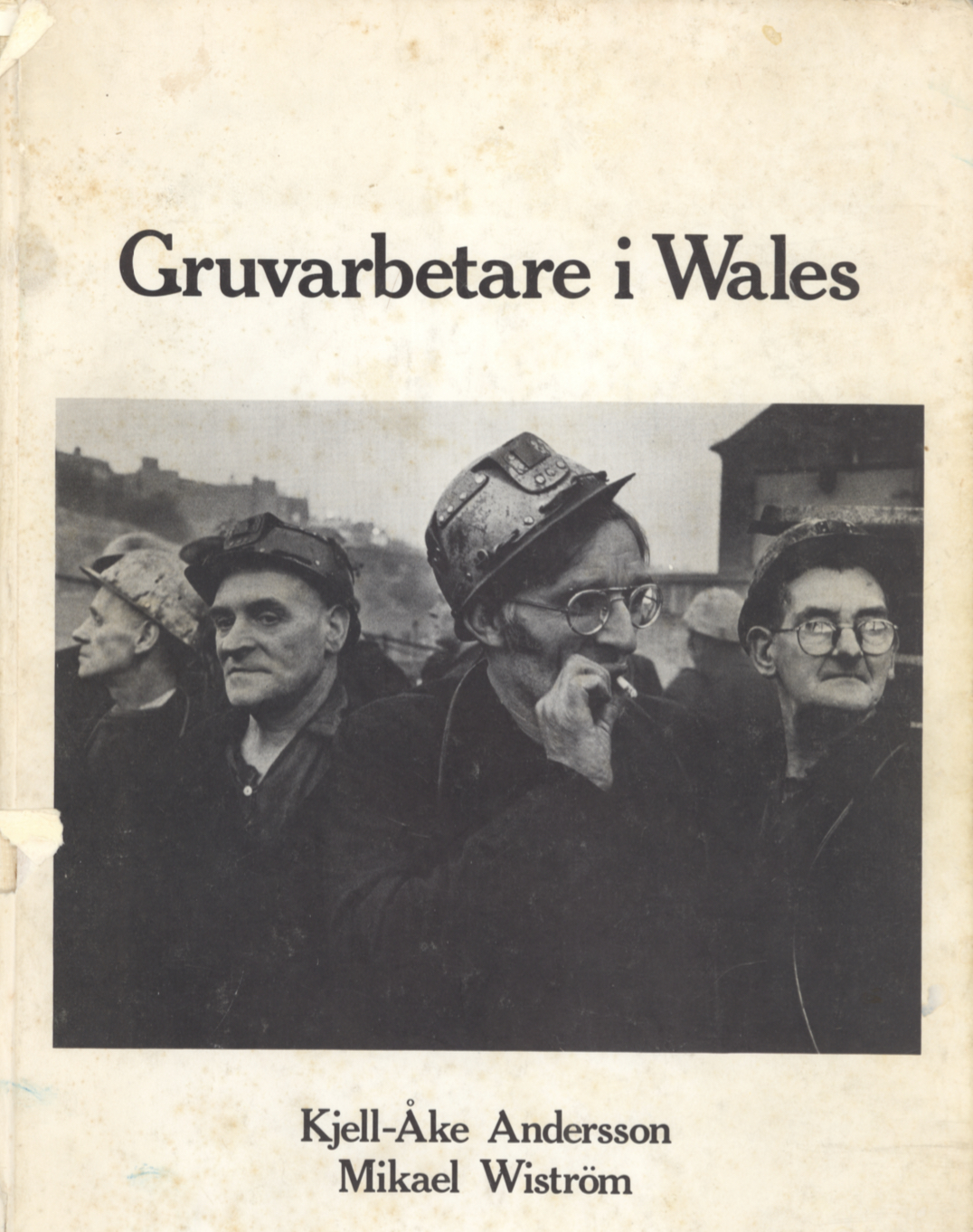
We organised many public events and exhibitions of words and photographs and we had many visitors. One of them, Rai Paul, was from Sweden and gave me a book that he thought fitted well with the work we were doing. It was called Gruvarbetare I Wales (Miners in Wales) and was a collection of photographs by Kjell-Ake Andersson of miners at the Bargoed colliery in South Wales. I was stunned by it: by the images of the miners and their families, by the ever-present coal mine and the dust and the blackness. It has stayed with me ever since, and my recent book (with Ray Hudson) The Shadow of the Mine begins with an image of Bargoed colliery taken from that book.
Andersson had visited South Wales in 1973. At that time, he was a student at the photography school in Stockholm and was on an expedition following in the steps of Eugene Smith, the American photographer who had seen in the mining villages of south Wales classic images of labour under industrial capitalism. Here too they had seen the strength of community life that had come to underpin trade unionism and social democratic politics in Britain. Smith was in fact one of Kjell-Ake’s role models and, as he explains:
In 1950 he was in Wales photographing mining communities. I fantasized about going there because I thought it looked like when Smith was there in the 50s. This was in the autumn of 1973. Me and my wife and our 7-month-old baby took our old car and took the ferry to Britain.
As others had found in the fifties, there were few places for visitors to stay in the mining villages. In Bargoed, the little group had thought that they might stay in the local pub. However, the miners felt that this would be inappropriate and inhospitable, with one offering them a room in his house instead. Which is where they stayed and became widely accepted by the miners and their families.
But it was hard work. It began with the miners’ morning shift when Kjell-Ake would stand with his camera day after day taking photographs until he became part of the landscape, blended in, and accepted as a new part of village life. Over time the people of Bargoed become involved in the project. It was the miners who insisted that Kjell-Ake had to join them with his camera underground, saying that the project would be incomplete without photographs of where the work actually took place. The opposition of colliery management had to be overcome! This took time and much coming and going between Bargoed and Stockholm, but in 1976 he finally got permission from the NCB to photograph the miners underground. It was this level of community engagement that made the book one of the most perceptive visual accounts of mining life during a critical period.
In 1973, the people in Bargoed remembered that, in the previous year, they had been involved in a victorious national strike. Following a decade of colliery closures and changes that had eroded miners’ wages they demanded recompense and a Court of Inquiry under Lord Wilberforce had supported their case reporting that:
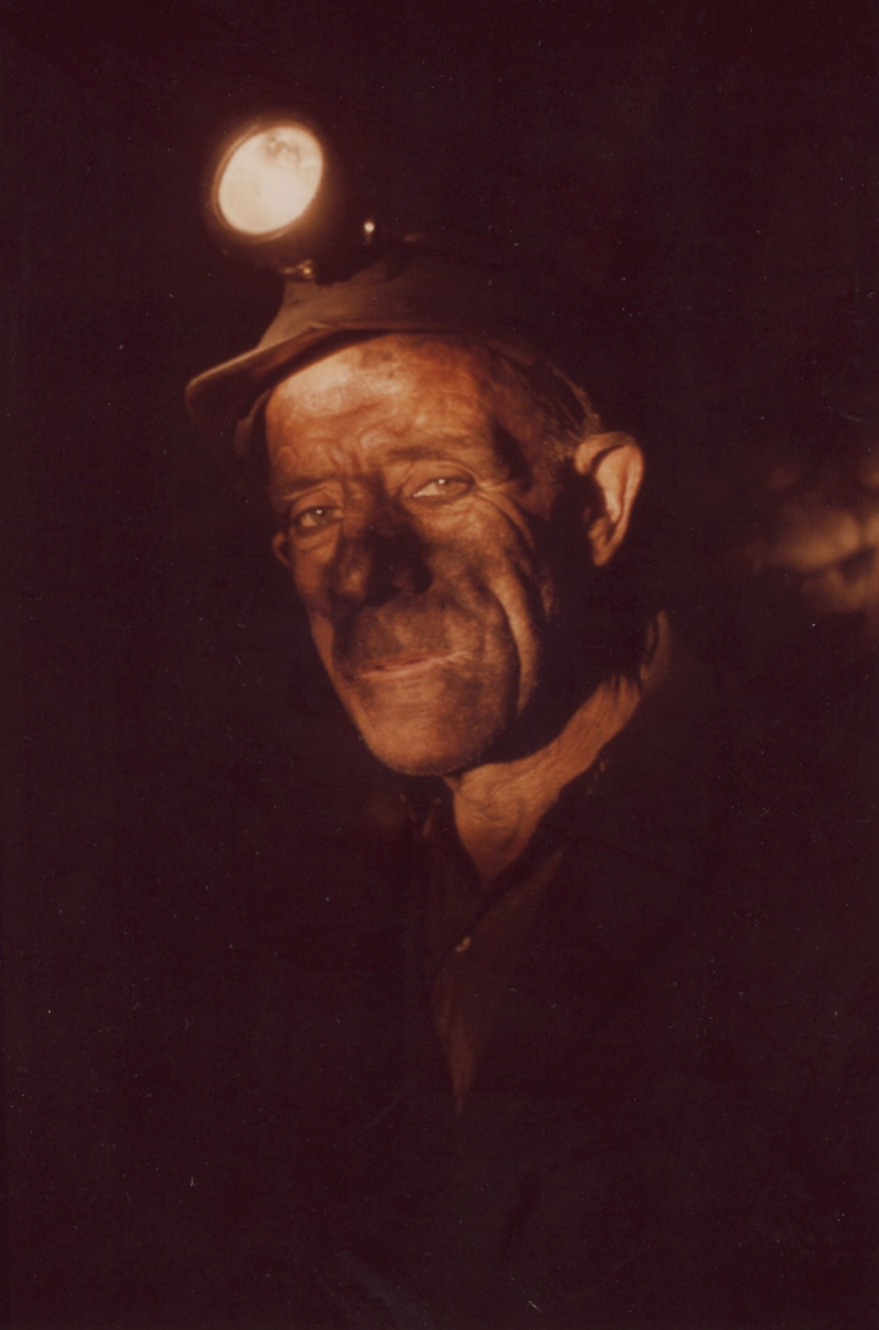
These conditions endured after the strike had ended. They are captured in Andersson’s photographs taken on the surface of the mine, in the lamp room and the bath house, and also underground in the roadways and at the coal face. Here, at a time when the National Coal Board had still not issued overalls to its workers, we witness the ingrained dust and dirt of the mine on the clothing, faces and bodies of the miners.
We see the activity of the mine, the bending, crawling, shovelling, and carrying. Through careful portraiture we get a glimpse of the character and camaraderie of working together underground, of being together in the cage and, thankfully, ending the shift. On the surface too the photographs taken in family homes and in the clubs have a natural feel. Together they create an atmosphere of community, located within a stark and physically isolated environment. The trade union is present too with lodge meetings led by the lodge secretary Elwyn Andrews and the lodge banners that came together during the national strike in 1974: a short strike that provoked a general election and the end of the Heath government. Momentous times.
In 1985, Kjell-Ake returned to South Wales, this time as a film director to record the miners who were involved in the longest strike in the history of British coal mining, attempting to stop the closure of the mines. As he explains,
I went there because I was so angry and irritated by the reporting of the strike in newspapers and on TV. No one described Thatcher’s attacks on the trade unions and the working class. I wanted to show the reason why the workers went on strike.
In 1977, Bargoed had joined the long list of closed collieries, so a new site was needed. In the Eastern valleys Oakdale colliery remained one of the area’s “big hitters” and was considered more secure than most. The men there had a reputation for moderation, but in 1984, they voted for strike action. It was here that Andersson set up camp in February to make his impressive realist documentary “Breaking Point”.
Once again his engagement with the local community is clear, giving the camera a discrete unseen presence as it joins with the people on picket lines, in canteens and mass meetings, drinking in the club and watching TV. His approach as ever involved “showing respect and being curious without disturbing anyone. A fly on the wall”. Here again he became more and more “impressed by the cohesion and strength among the miners and their wives and other women despite the strike going on for almost a year”.
With winter set in, the snow falling, and as some men start to return to the pit, we see the resilience of those who remain on strike and also the tensions that emerge within a once united community. Tensions that create problems for the local NUM lodge, and impel its chairman, Dan Canniff, to use the phrase that becomes the title of the film. With one eye on the future, when the strike will end, he urges caution over the condemnation of those have returned to work, after being on strike for eleven months. People, he says, have different circumstances, they are not all the same and all have different “breaking points”.
Here, and throughout the coalfield, the support of the women for the strike (in a variety of different ways) was critical and we see this through the lives of Cath Francis and her husband Ray. They talk about juggling domestic arrangements to accommodate Ray’s picketing and Cath’s involvement in the support group which is clearly pivotal but which nevertheless leaves her with pangs of conscience and embarrassment over domestic roles unfulfilled. The women took responsibility for preparing meals and played an important part in the door-to-door neighbourhood collections for food and other donations to the miners’ cause. We see this on the doorstep and also at the meeting of the women where some of the men “the lazy buggers” are criticised for refusing to help. It’s pointed out to applause that “the tins don’t grow in them carrier bags”. In response the chair, drawing implicitly on “heroic” and masculine images of miners, explains that while men might go picketing “when it comes to food collection and standing on street conners with the tin open asking for money…. some men have dignity”.
Everywhere there are glimpses of cracks appearing alongside strenuous efforts to hold things together. Alan Baker the lodge secretary was well known across the coalfield as an erudite and leading proponent of a broad front approach to the struggle, going beyond the mass strike to build more general support from the public though communication and alliances. We see him in conversation over strategy with Dan Canniff and at a meeting with the convenor of the local Switchgear factory to receive the regular weekly donation that has been made by the workers there throughout the strike. Most telling is the scene where he is filmed watching Arthur Scargill on television, where the NUM President uses the opportunity to speak directly to his members who are still on strike. Visibly frustrated Baker, speaking to his wife, who is off camera, he calls for a different approach one that directly involves talking to and engaging the public. We see him for the last time standing with a pint of beer, alone and disconsolate, in the club.
The strike continued as did the arguments with management. Everywhere in mining strikes (and in others too) there have been disputes over the amount of necessary work needed in order to preserve the facility of the mine. Water needed to be pumped out and where faces had been standing for many months questions emerged over strata control and the security of the machinery. This became an issue at Oakdale and the lodge officials needed to be convinced that it was not a con but a real threat to the future of the mine. A threat to their future. The tension over sustaining the strike and securing the mine was clear. The dilemma that eventually resolved through an agreed and partial return to work. Here the film ends and with it a sense that the strike itself had run its course and would soon end.
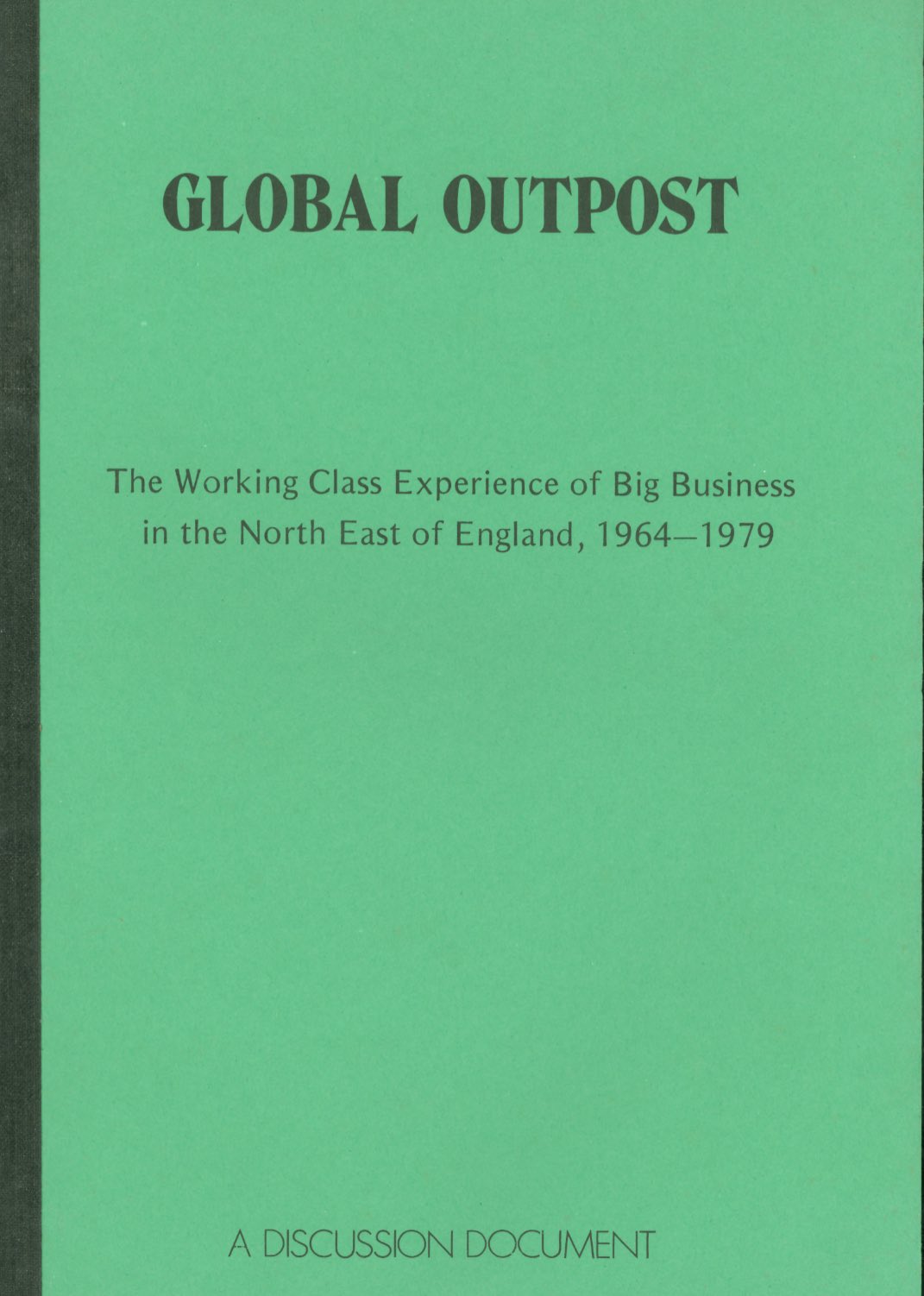
Going through my files and boxes of papers from the early 80s, I came across a document called “Global Outpost; The Working Class Experience of Big Business in the NE of England 1964-1978”. I wrote it with Terry Austrin in 1980 and it was based on interviews and discussions with workers and shop stewards in various branch plants of multi-national corporations operating on the old Durham coalfield. It was part of a broader research project looking at the transformations in working class life that had accompanied the closures of the coal mines in the 1960s. We had produced it as a Discussion Document, which was deliberately descriptive, using several accounts of changes in work and labour relations as an introduction to conversations about possible future strategy and tactics. We involved the regional office of the General and Municipal Workers Union, and they took 100 copies, devoted the front page of their newspaper to it and helped us set up further meetings with other shop stewards and union officials The shop stewards committee at Vickers Elswick plant took another 50 copies and there were scores of requests from other committees, local libraries and individuals, mainly in the North East but also nationally. I have written about this in “Engaging Labour” and how the paper took on a Samizdat quality being passed around and talked about.
So, what happened to it? Well through the other meetings and interviews we collected more information on how different corporations operated, each raising questions about the prospects and limitations of trade union organisation across a region with an economy dominated by branch plants – a global outpost. This would have allowed us to extend the document and the series editor at Fontana was very keen for it to be commissioned as a book and for it to be brought out quickly. Fontana had published “Strike at Pilkington’s” and Richard Hyman ‘s book “Strike” along with other well-known collections on work and labour, so, we were pleased. However for reasons I can’t recall, the company took a distinct change of direction, moving away from any interest in the book and the deal fell through, leaving us disappointed.
At that time, I was in close contact with Henry Friedman, the ex-convenor at Ford’s River Plant at Dagenham who had been centrally involved in the sewing machinist strike there. Wheelchair bound, Henry was, and saw himself as, a labour strategist, and when I visited him in Bures in Suffolk, we talked about prospects for developing trade union combine committees. I had sent him a copy of “Global Outpost” and while he felt that in letting activists tell their own story we had produced an extremely valuable document, he wrote that there was a danger that “an unremitting recital of misfortune” could engender a “mood of gloom and defeatism”. In his view what was needed at that time was “a fighting spirit and recognition that at some point it is necessary to take a stand regardless – “their Waterloo or ours’”.
At that time, it seemed that only the miners could make such a stand and in 1981 they were on strike. From then on, they became the centre of our attention pushing “Global Outpost” into the background. Now, as an historical document, it may be worth a read. Terry and I went on to publish “Masters and Servants”, based on another discussion document and the first of two books we had planned on the miners of Durham. We were working on the second until five years ago when, tragically Terry’s died.
So there is the story of Global Outpost as I remember it. I do hope you enjoy reading the scan:
In September I was asked by my friend Ian Rhys Jones at the research Institute WISERD to give a talk at their awayday about the bookThe Shadow of the Mine that I had written with Ray Hudson. The awayday became a virtual one, as a consequence of the virus, and we decided that rather than me speak for 40 minutes it would be more interesting to have a conversation about the book with my old friend Gareth Rees. This was recorded, and as with the interview for Jacobin it extends some of the issues that we discussed in the book. Some people have found this interesting, the video is below and here’s the link to the event on the WISERD site.
On one afternoon in early October my friend Ray and I were involved in a long conversation about our new book The Shadow of the Mine with a young woman in Boston, Piper Winkler. She was interviewing us for the radical magazine Jacobin and the conversation on Zoom lasted for three hours. We were very taken by her interest in the history of the British coalminers. We learnt that she and her friends had been very influenced by the film Pride and was keen to talk about the organisation of solidarity which the coalminers seemed to have mastered. The interview was wide ranging and went well beyond the details of the book. Some people found it interesting so here’s the link the the Jacobin article.
When the renowned Swedish film director Kjell-Ake Andersson was a young man, he visited South Wales in 1973 on a photographic expedition. Travelling on a shoe string, with his girlfriend and eight month old daughter Matilda he was taken in to a miner’s home in Bargoed. They stayed together in the village for three months, talking with the people and taking photographs, returning twice in the following year. Widely accepted by the miners and their families, Anderson’s photographs portrayed their lives in intimate detail. His book, Gruvarbetare in Wales, was published in Sweden in 1977 and has become recognised as one of the most perceptive visual accounts of mining life in that period. One of the photographs is included inside The Shadows of the Mineand we are hoping to find a way of exhibiting his work in Wales in 2022.
Today Andersson often looks back to the time at Bargoed and recalls ‘meeting the mining community has made a great impact in my life. The generosity and solidarity and friendship I have never forgotten’.
He did return to the valleys in 1985 to make another important contribution. By this time established in film making, his documentary, Breaking Point, on the 1984-85 strike at Oakdale provided a telling account of the community in the snows of January. He has provided us with a version of this film: the narration is in Swedish, but the sounds of the valley town and the words of its people can be clearly heard, bringing back memories of the weeks before the strike ended. Take a look.
Breaking Point (1985). A film by Kjell-Ake Andersson
When Prime Minister Boris Johnson visited Scotland he was asked to name the date when the UK would be free of fossil fuel. He provided no answer, instead he talked of the “good start” provided by Mrs Thatcher’s closure of the coal mines, adding to the view that the dramatic closure of the British coal industry was driven by environmental necessity. Anything but as my friend Ray Hudson and I explore in our article in Tribune. Thatcher’s main concern was the NUM. Our reliance on coal extended well beyond the closure of the mines. Today Britain is far less well prepared for a green future that countries (like Germany) that kept their pits open longer.
When the last coal mine – Kellingley – closed in 2015 its shipments to the Drax power station were replaced with coal from Russian mines then adding to the half a trillion tonnes of imports made by the UK since 2001. Meanwhile on the coalfields the miners were, to all intents and purposes, pensioned off and their future left in the hands of the market and the beneficence of foreign inward investment. There was no strategic national plan for the coalfields or for a green economy! Today, Johnson’s description of Britain as the “Saudi Arabia of wind” ignores the 34% of electricity generation that comes from burning gas in power stations.
All this is fanciful. The future may well lie in off-shore wind power but no British company has the expertise that Vestas and Siemens-Gamesa have accumulated over the last decades. In fact, the number of companies based in the UK involved in off-shore wind declined by a third in the years between 2014 and 2019. If there was indeed an early start it has clearly been wasted. Johnson’s projection of the UK as a “world leader” in climate change has already been called out as a lie and it is clear that any future green revolution it’s unlikely to be driven by technologies ‘built better’ in the UK on its old industrial regions.









 Huw Beynon