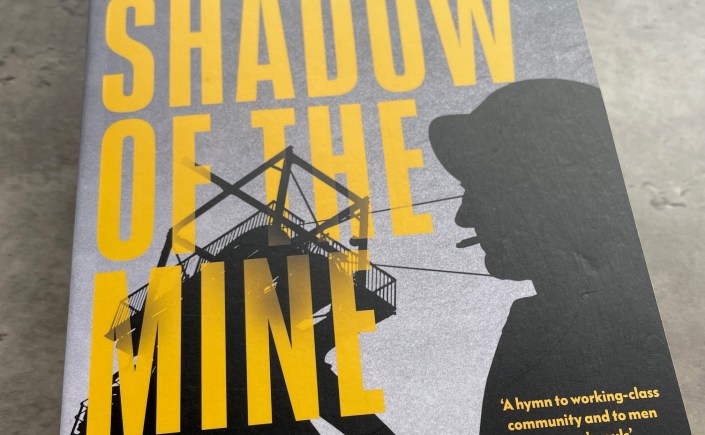
It was good to see the paperback edition of The Shadow of the Mine. It includes a postscript from us that looks back to the strike of 1984-85 as a major turning point and forward to the prospects of a decarbonised economy. In this “green transition” the ending of the coal industry (and the fates of the coal miners) can be seen as significant and perhaps a guide to the prospects of the other workers in the carbon economy. We write more about this in the current issue of Red Pepper (we will link directly when the page becomes live).
The automobile industry is a good example. With its reliance on the internal combustion engine (ICE) it stood alongside coal as a central part of the carbon economy. Its dismantling could prove as tortuous as the removal of coal mining. In the UK it was planned that all sales of new ICE vehicles would cease by 2030: a boldness matched by a remarkable lack of preparedness, cut adrift from the rapid changes that had taken place in the industry this century. Reality dawned recently when the “planned” date was pushed back to 2035.
Electrical vehicles (EVs) differ significantly from those powered by the ICE. With 90 per cent fewer moving parts they are simpler to make. This lead the Ford company in the US to question whether existing workers needed to move into the new production system. The locomotive power of EVs comes from the rechargeable battery for which nickel and lithium are key components. These are located, like coal, underground – mostly in South America and Africa, and particularly in the Democratic Republic of the Congo. Many of these reserves have already been acquired by Chinese companies. Andy Palmer, the man who brought Nissan’s LEAF EV into production in the UK explained the significance of all this when he said that ‘China owns that supply chain’.
China now overwhelmingly dominates the manufacture of batteries and recently of EVs too. In this, one company BYD (‘Build Your Dreams’) is dominant. Set up as a battery producer in 1995, it expanded rapidly and with government support has emerged as the world leader, outselling Tesla in China and fully prepared for a major export drive. In the face of this the interventions by the British government seem pathetic, with the British Volt saga standing out as an example of what not to do. There seems little awareness of the scale of the threat . This was amplified when BYD announced that it had no plans to manufacture batteries in the UK.
Forty years ago the Ford Motor Company in the UK, introduced a new calendar called AJ – After Japan – based on the threat it faced from companies like Toyota. Today maybe another change would be in order to AC – After China. Nissan seems to have already accepted this in making a partnership deal with another Chinese battery producer Envision which will provide batteries for 100,000 more EVs a year. BMW has announced that it will be making the Mini EV in China (while also undertaking some production in the UK to circumvent tariffs for the USA market). In response the Biden administration in the USA though its oddly named Inflation Reduction Act, sanctioned enormous subsidies aimed at bolstering the domestic manufacture of batteries and EVs
In 2023 Ed Miliband endorsed a weak form of the US approach and talked of a ‘green prosperity plan’ to deliver a multi-billion investment by government and businesses. He said ‘Joe Biden wants the future Made in America. We want the future Made in Britain’. It sounded hollow then and with the ditching of the plan, more so now.
The coal industry was dismantled with abrupt haste and little concern for the people or their futures: this was left in the hands of the market and hopes of inward investment. There was no serious strategy for a meaningful transition to a new kind of green economy. Today, facing a further change of epic proportions we are no better prepared.
 Huw Beynon