Nineteen Eighty-Four

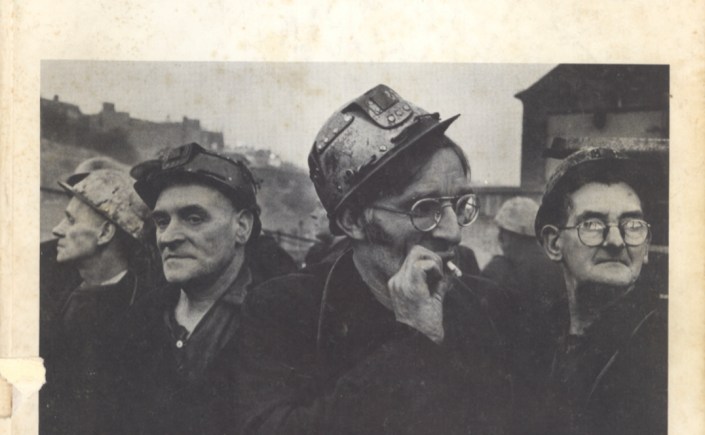
Image of Easington Miners in 1972

Over the last eighteen months or so, as I have read and watched accounts of the coal miners’ strike, I have reflected on my own time on the coalfields during that year. I was based in Durham and had been involved in research and teaching programmes in the mining communities, which continued up to and during the strike. I was quite heavily involved in evening meetings built around the “Campaign for Coal” initiated by the NUM which has largely been forgotten. Also, to me, many of the emphases seemed to be not quite right; they didn’t feel like it felt like back then. So much so that I found myself mouthing the words of Max Boyce: “and I was there!”

Issues like these led me to start once again rummaging through the many files and boxes I have kept marked “Miners’ Strike”, aiming to check out one or two of the historical facts and to check on some of the notebooks that I had kept. Then I made a very unexpected discovery. Inside one of the boxes, I discovered an envelope containing over 300 negatives of photographs that I had taken in the communities during 1984. I had completely forgotten about these to the extent that, when asked, I would say that I had not taken any photographs during that year. But obviously I had.

Most, but not all of these, were in Easington, where I had a base, and I was there In August when the unity of the strike in the colliery was being broken by one man, bused in from a village in the centre of the county. What followed was documented brilliantly by Keith Pattison who arrived there after the riot and saw the full extent of the reenforced police presence and the harsh crack-down. His photographs have become legendary.

Keith had been commissioned by the Side Gallery to photograph the events as they unfolded. At the time I felt that I was one photographer too many and that I should let the professional take over. I wrote some text for Keith’s exhibition, and this was published as a brochure (Easington 1984). More recently Keith has published his photographs in his wonderful book (No Redemption) with text from David Peace.

Keith and I became very good friends and, unsurprisingly I talked with him about the negatives. I thought they would bring back memories for him too. He scanned them into a digital format and told me that they were important and that I had to publish them as a book.  This was obviously nice to hear and encouraging, although I was daunted by the idea of a book.

I have been spending a lot of time looking though the photos, organising them by place and time and thinking how best I could write alongside them. Many years ago, I worked with another photographer, Nick Hedges, writing a text for the book Born to Work. (see Media – Huw Beynon). I wondered whether I could follow the style I used there. The situation is different of course because here we follow a story as it unfolded, drawing on my notebooks.  Also, as I took the photographs, the story is about me as well – me and what I was doing there. In spite of these differences, I felt that Born to Work was an example that I could follow, using text to draw out the wider issues that lay inside and behind the photographs them at the time while remembering how I felt at the time

Here, I thought that I could put together some themes that may be of interest

Young Men

From the very beginning I was struck by how young many of the coal miners active in the strike were.  This was made clear from the very beginning at the gates of the miners’ headquarters in Durham when a decision was being made strike or no strike. They talked to me about the strike in 1972, all of the stories that they had heard of it, and they were looking forward, with excitement, to being on strike. They were also looking forward to a full life, working underground, as miners. During the strike, those of them who were single would be without any means of support. They came to rely on “the kitchens” organised by the women of the villages for their daily meals.   

Image of Easington Miners in 1972

Rallies and Togetherness

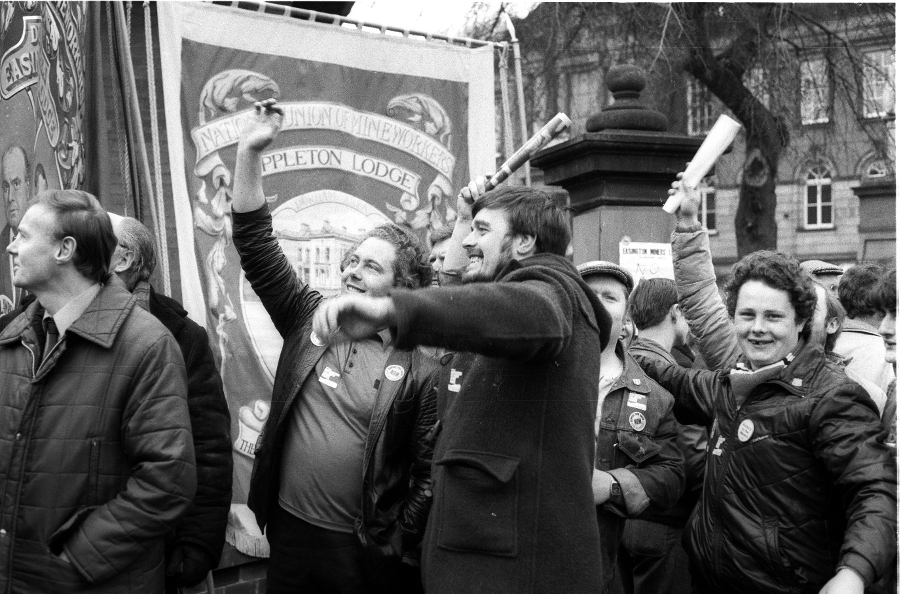
Throughout the summer there were conferences at Sheffield, picketing in Nottinghamshire and then at the Orgreave coke works. Support groups were established in the coalfields and pit villages often with kitchens providing cooked meals. There were also rallies, meetings and events. All too many to summarise or easily capture. During July, while key national negotiations were taking place, there was a rally in Durham every weekend. These were important in maintaining morale across the coalfield and revealed the extent to which women have become centrally involved in the strike.

Breaking the Strike in the North

The national talks centred on the NCB’s idea of maintaining collieries in possession of “beneficial reserves”. This was rejected by the NUM leadership. What followed was a concerted attempt to break the strike. Through a national campaign beginning in North Derbyshire and extending to Scotland and then the North East, managers were contacting striking miners – most often those living away from the collieries and travelling to work by NCB coaches – encouraging them to go back to work, offering them protection from abuse.
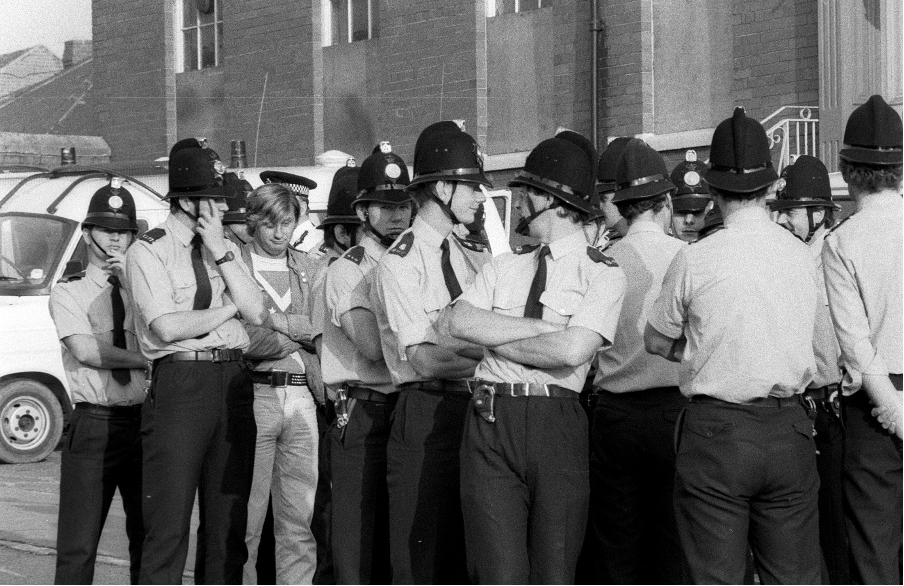
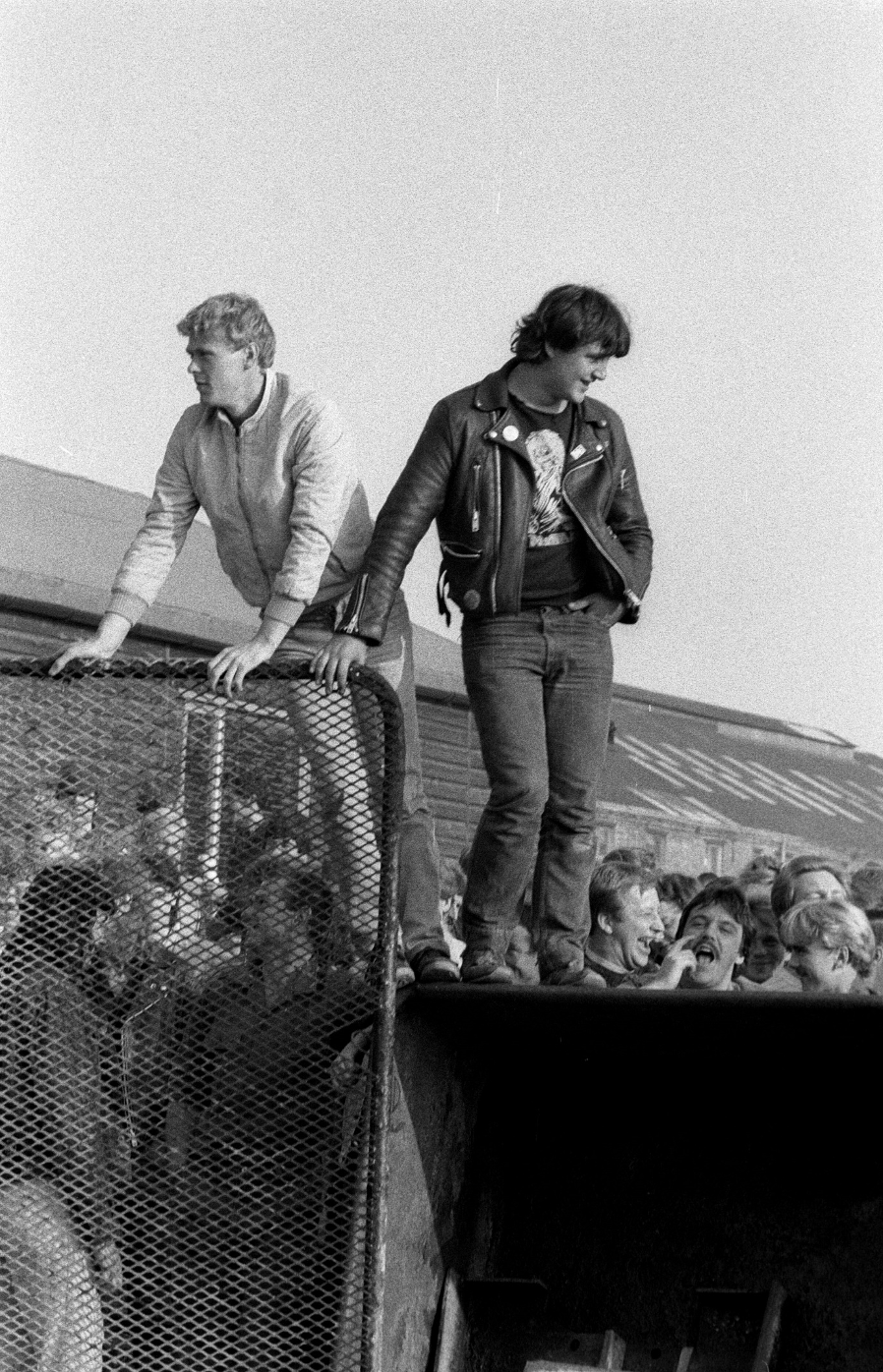
On the first Monday there was a relaxed feeling at the giant Easington colliery, with the lodge officials confident than no one would be breaking the strike. The calm was broken by the arrival of Gordon Parnaby with his car lights flashing. Someone was coming. One man – Paul Wilkinson – was on the bus. He had worked at the East Hetton colliery at Kelloe before moving to Easington after it closed. The Kelloe village was solidly behind the strike and Gorden explained; “he worked at the pit but he’s not a Kelloe man. He’s from Bowburn” and he was on the bus as it arrived in the village, now heading for the colliery at the coast.  All efforts were made to “defend our pit” with barricades and weight of numbers.  But Wilkinson was smuggled in through the back door and chaos ensued.
Mining Images – Kjell-Ake Andersson and the South Wales Miners

In 1979 at a time of great social and political change I was living in Durham.  I was closely   involved with the coal miners and the NUM, and also with a group called “Strong Words” that we had set up to record and publish the words and images of working-class people in the North East of England.

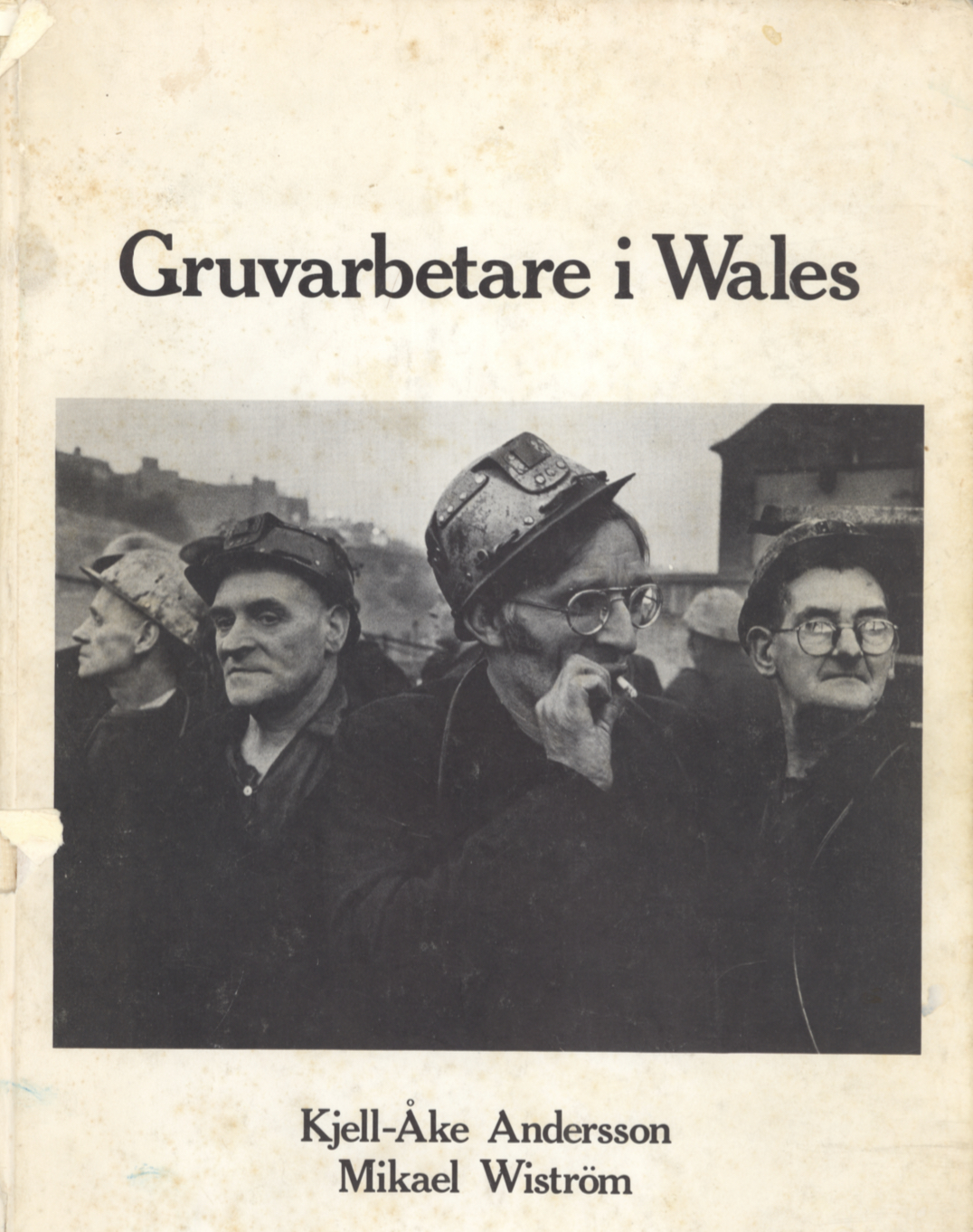
We organised many public events and exhibitions of words and photographs and we had many visitors. One of them, Rai Paul, was from Sweden and gave me a book that he thought fitted well with the work we were doing. It was called Gruvarbetare I Wales (Miners in Wales) and was a collection of photographs by Kjell-Ake Andersson of miners at the Bargoed colliery in South Wales. I was stunned by it: by the images of the miners and their families, by the ever-present coal mine and the dust and the blackness. It has stayed with me ever since, and my recent book (with Ray Hudson) The Shadow of the Mine begins with an image of Bargoed colliery taken from that book.  

Andersson had visited South Wales in 1973. At that time, he was a student at the photography school in Stockholm and was on an expedition following in the steps of Eugene Smith, the American photographer   who had seen in the mining villages of south Wales  classic images of labour under industrial capitalism. Here too they had seen the strength of community life that had come to underpin trade unionism and social democratic politics in Britain. Smith was in fact one of Kjell-Ake’s role models and, as he explains:

In 1950 he was in Wales photographing mining communities. I fantasized about going there because I thought it looked like when Smith was there in the 50s. This was in the autumn of 1973. Me and my wife and our 7-month-old baby took our old car and took the ferry to Britain.

As others had found in the fifties,  there were few places for visitors to stay  in the mining villages. In Bargoed, the little group had thought that they might stay in the local pub. However, the miners felt that this would be inappropriate and inhospitable, with one offering them a room in his house instead.  Which is where they stayed and became widely accepted by the miners and their families.

But it was hard work. It began with the miners’ morning shift when Kjell-Ake would stand with his camera day after day taking photographs until he became part of the landscape, blended in, and accepted as a new part of village life. Over time the people of Bargoed become involved in the project. It was the miners who insisted that Kjell-Ake had to join them with his camera underground, saying that the project would be incomplete without photographs of where the work actually took place. The opposition of colliery management had to be overcome! This took time and much coming and going between Bargoed and Stockholm, but in 1976 he finally got permission from the NCB to photograph the miners underground.  It was this level of community engagement that made the book one of the most perceptive visual accounts of mining life during a  critical period.

In 1973, the people in Bargoed remembered that, in the previous year, they had been involved in a victorious national strike. Following a decade of colliery closures and changes that had eroded miners’ wages they demanded recompense and a Court of Inquiry under Lord Wilberforce had supported their case reporting that:

Working conditions in the coal mines are certainly amongst the toughest and least attractive and we agree that miners’ pay levels should recognise this. Other occupations have their dangers and inconveniences, but we know of none in which there is such a combination of danger, health hazard, discomfort in working conditions, social inconvenience and community isolation.

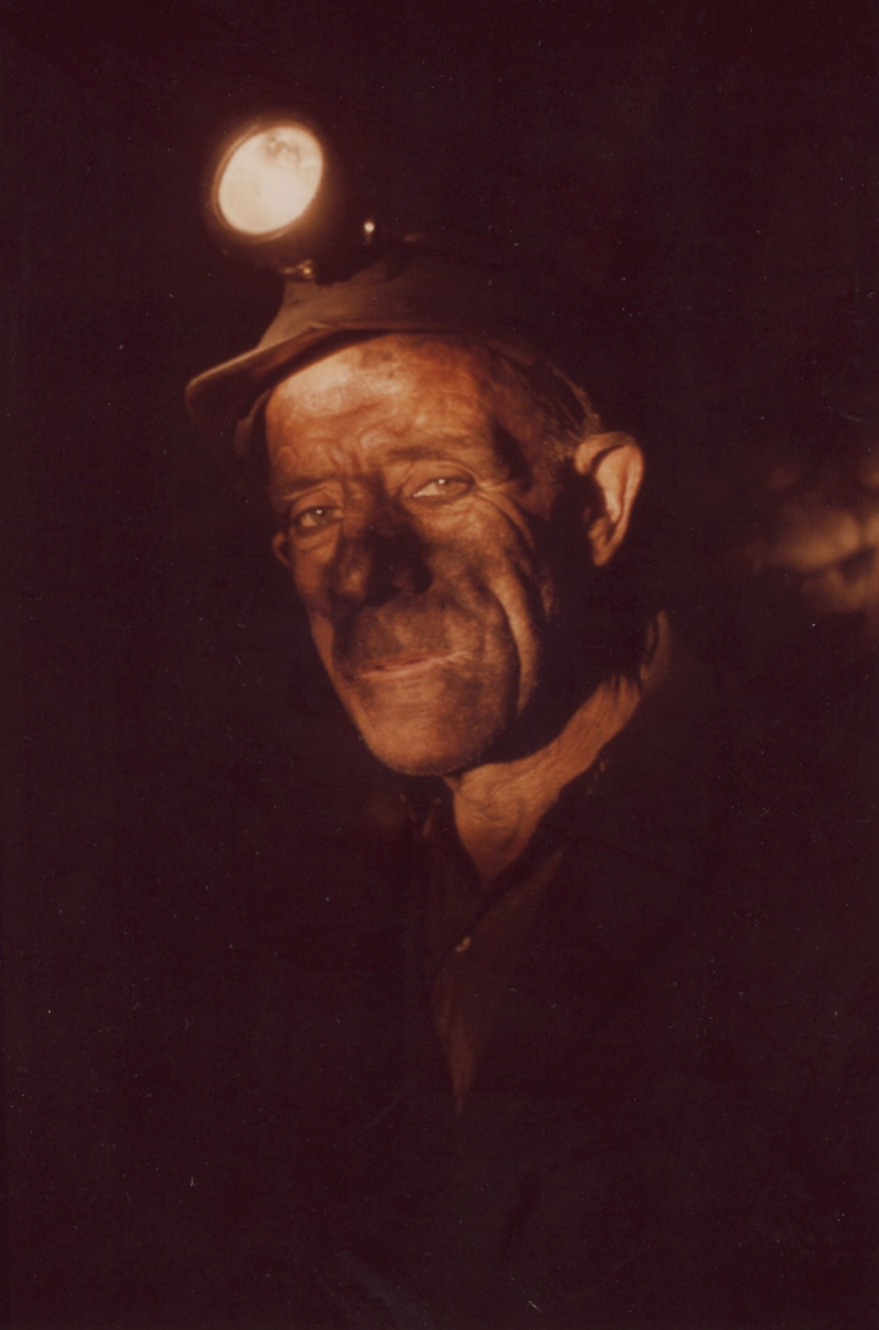
These conditions endured after the strike had ended. They are captured in Andersson’s photographs taken on the surface of the mine, in the lamp room and the bath house, and also underground in the roadways and at the coal face. Here, at a time when the National Coal Board had still not issued overalls to its workers, we witness the ingrained dust and dirt of the mine on the clothing, faces and bodies of the miners.

We see the activity of the mine, the bending, crawling, shovelling, and carrying. Through careful portraiture we get a glimpse of the character and camaraderie of working together underground, of being together in the cage and, thankfully, ending the shift. On the surface too the photographs taken in family homes and in the clubs have a natural feel. Together they create an atmosphere of community, located within a stark and physically isolated environment. The trade union is present too with lodge meetings led by the lodge secretary Elwyn Andrews and the lodge banners that came together during the national strike in 1974: a short strike that provoked a general election and the end of the Heath government.  Momentous times. 

In 1985, Kjell-Ake returned to South Wales, this time as a film director to record the miners   who were involved in the longest  strike in the history of British coal  mining, attempting to stop the closure of the mines. As he explains,

I went there because I was so angry and irritated by the reporting of the strike in newspapers and on TV. No one described Thatcher’s attacks on the trade unions and the working class. I wanted to show the reason why the workers went on strike.

In 1977, Bargoed had joined the long list of closed collieries, so a new site was needed.  In the Eastern valleys Oakdale colliery remained one of the area’s “big hitters” and  was considered more secure than most. The men there had a reputation for moderation, but in 1984, they voted for strike action.  It was here that Andersson set up camp in February to make his  impressive realist documentary “Breaking Point”.

Once again his engagement with the local community is clear, giving  the  camera  a discrete  unseen presence as it joins with the people on picket lines, in canteens and mass meetings, drinking in the club and watching TV. His approach as ever involved “showing respect and being curious without disturbing anyone. A fly on the wall”.  Here again he became more and more “impressed by the cohesion and strength among the miners and their wives and other women despite the strike going on for almost a year”.

With winter set in, the snow falling, and as some men start to return to the pit, we see the resilience of those who remain on strike and also the tensions that emerge within a once united community. Tensions that create problems  for the local NUM lodge, and impel its chairman, Dan Canniff, to  use the  phrase that becomes the title of the film. With one eye on the future, when the strike will end, he urges caution over the condemnation of those have returned to work, after being on strike for eleven months. People, he says, have different circumstances, they are not all the same and all have different “breaking points”. 

Here, and throughout the coalfield, the support of the women for the strike (in a variety of different ways) was critical and we see this through the lives of Cath Francis and her husband Ray. They talk about juggling domestic arrangements to accommodate Ray’s picketing and Cath’s involvement in the support group which is clearly pivotal but which nevertheless  leaves her with pangs of conscience and embarrassment over domestic roles unfulfilled. The women took responsibility for preparing meals and played an important part in the door-to-door neighbourhood collections for food and other donations to the miners’ cause. We see this on the doorstep and also at the meeting of the women where some of the men “the lazy buggers” are criticised for refusing to help. It’s pointed out to applause that “the tins don’t grow in them carrier bags”. In response the chair, drawing implicitly on “heroic” and masculine images of miners, explains that while men might go picketing “when it comes to food collection and standing on street conners with the tin open asking for money…. some men have dignity”. 

Everywhere there  are glimpses of cracks appearing alongside strenuous efforts to hold things together. Alan Baker the lodge secretary was well known across the coalfield as an erudite and leading proponent of a broad front approach to the struggle, going beyond the mass strike to build more general support from the public though communication and alliances.  We see him in conversation over strategy with Dan Canniff and at a meeting with the convenor of the local Switchgear factory to receive the regular weekly donation that has been made by the workers there throughout the strike. Most telling is the scene where he is filmed watching Arthur Scargill on television, where the NUM President uses the opportunity to speak directly to his members who are still on strike. Visibly frustrated Baker, speaking to his wife, who is off camera, he calls for a different approach one that directly involves talking to and engaging the public. We see him for the last time standing with a pint of beer, alone and disconsolate, in the club.

The strike continued as did the arguments with management. Everywhere in mining strikes (and in others too) there have been disputes over the amount of necessary work needed in order to preserve the facility of the mine. Water needed to be pumped out and where faces had been standing for many months questions emerged over strata control and the security of the machinery. This became an issue at Oakdale and the lodge officials needed to be convinced that it was not a con but a real threat to the future of the mine. A threat to their future. The tension over sustaining the strike and securing the mine was clear. The dilemma that eventually resolved through an agreed and partial return to work. Here the film ends and with it a sense that the strike itself had run its course and would soon end.

The film Breaking Point and a collection of the Bargoed photographs will be shown in Cardiff at a conference on 2 March 2024 – The past in the present: Reflections on coal mining and the miners’ strike 1984-85.

WISERD conversation – The Shadow of the Mine

In September I was asked by my friend Ian Rhys Jones at the research Institute WISERD to give a talk at their awayday about the bookThe Shadow of the Mine that I had written with Ray Hudson. The awayday became a virtual one, as a consequence of the virus, and we decided that rather than me speak for 40 minutes it would be more interesting to have a conversation about the book with my old friend Gareth Rees. This was recorded, and  as with the interview for Jacobin it extends some of the issues that we discussed in the book. Some people have found this interesting, the video is below and here’s the link to the event on the WISERD site

Conversation with Jacobin

On one afternoon in early October my friend Ray and I were involved in a long conversation about our new book The Shadow of the Mine with a young woman in Boston, Piper Winkler. She was interviewing us for the radical magazine Jacobin and the conversation on Zoom lasted for three hours. We were very taken by her interest in the history of the British coalminers. We learnt that she and her friends had been very influenced by the film Pride and was keen to talk about the organisation of solidarity which the coalminers seemed to have mastered. The interview was wide ranging and went well beyond the details of the book. Some people found it interesting so here’s the link the the Jacobin article.

Breaking Point

Film – Miners Strike 1985

When the renowned Swedish film director Kjell-Ake Andersson was a young man, he visited South Wales in 1973 on a photographic expedition. Travelling on a shoe string, with his girlfriend and eight month old daughter Matilda he was taken in to a miner’s home in Bargoed. They stayed together in the village for three months, talking with the people and  taking photographs, returning twice in the following year. Widely accepted by the miners and their families, Anderson’s photographs portrayed their lives in intimate detail. His book, Gruvarbetare in Wales, was published in Sweden in 1977 and has become recognised as one of the most perceptive visual accounts of mining life in that period. One of the photographs is included inside The Shadows of the Mine and we are hoping to find a way of exhibiting his work in Wales in 2022.

Today Andersson often looks back to the time at Bargoed and recalls ‘meeting the mining community has made a great impact in my life. The generosity and solidarity and friendship I have never forgotten’.

He did return to the valleys in 1985 to make another important contribution. By this time established in film making, his documentary, Breaking Point, on the 1984-85 strike at Oakdale provided a telling account of the community in the snows of January. He has provided us with a version of this film: the narration is in Swedish, but the sounds of the valley town and the words of its people can be clearly heard, bringing back memories of the weeks before the strike ended. Take a look.

Breaking Point (1985). A film by Kjell-Ake Andersson

Our book is now published…

Well our new book The Shadow of the Mine: Coal and the End of Industrial Britain is now published and also reviewed here and there:

“A hymn to working-class community and to men and women’s souls” Will Hutton, author of The State We’re In

“Refreshing and necessary … [The Shadow of the Mine] explains in loving, careful detail why working people’s relationship with Labour in former industrial communities … had become complex and ultimately soured.” Laura Pidcock, Red Pepper

“Their brilliant analysis of the decline of British coal mining, and its social and political effects, is required reading for those who would speak for this working class. It is in many ways a study in the lost world of British labourism.” David Edgerton, The Times Literary Supplement

The Shadow of the Mine reminds us why this spirit [of solidarity and collectivism] has lived on in the coalfields, in spite of people feeling a sense of political betrayal going back decades … enlightening.” The Guardian

“Their new book is essential reading for anyone who wants to dig deeper beyond vague generalizations about the “red wall” that have proliferated since December 2019…Beynon and Hudson encourage us to explore the long-term trends that have shaped the bewildering political situation we find ourselves in now” Charlotte Austin, Jacobin

“The Shadow of the Mine, is a moving account of 150 years of coalfield history, focusing on South Wales and Durham. It is not, however, a detached study of the past. By tracing the “deep story” of the marginalisation of Britain’s coalfields, it aims to understand the continuing exclusion of working-class people in deindustrialised areas from political and social life…if the current Labour leader wants to understand the challenges facing him, he would be far better reading The Shadow of the Mine than listening to PR companies telling him to wrap the party in a union jack.” Diarmaid Kelliher, Antipode Online

About the book

The Shadow of the Mine: Coal and the End of Industrial Britain, London, Verso, 2021, 402pp. ISBN -13:978-1-83976-156-0

This historical study of the coal industry tells of King Coal in its heyday and how communities of mining families created a unique and powerful social and political presence in areas like South Wales and Durham. In 1984 miners here were involved in a yearlong strike to save jobs  and to save coal mining. After the defeat the industry went into precipitous decline and this book outlines the social and political consequences that followed: often told in the words of the people themselves.

Coalfield landscapes (from The Shadow of the Mine)

There is an insert of glossy black photographs in the middle of our new book, The Shadow of the Mine. They illustrate thew story of the book: the overwhelming presence of mining, the strike to save to industry and the community response, the closures, the changing landscapes of decline sitting alongside the promises of new industry and a better way of life. The selection ends with the response from within – collective ownership of the mine at Tower and the continuation of the annual Big Meeting in Durham. We have brought them together here along with a couple of additions of our own:

Coalfield landscapes

Thanks to Kjell-Åke Andersson, Paul Reas and Keith Pattison

BBC Radio 4 Thinking Allowed – Coalmining & Luddism: What do we mean by progress?

A couple of weeks ago I was invited to talk with Laurie Taylor on his programme “Thinking Allowed” about our new book:  “The Shadow of the Mine: Coal and the End of Industrial Britain”.  Subsequently I  had lots of messages from old  friends pleased to know  that I was still alive and kicking! The interview concentrated on a time in this country when there were miners, and focused on the long story of  the mining districts of south Wales and Durham. It was this time that my old friends were pleased to be reminded of. If you are interested too it is available on the BBC website.

Classic book: The Enemy Within

I look back at Seamus Milne’s classic The Enemy Within: The Secret War Against The Miners. This article is available on the Red Pepper website.

The Enemy Within

The Enemy Within