Nineteen Eighty-Four

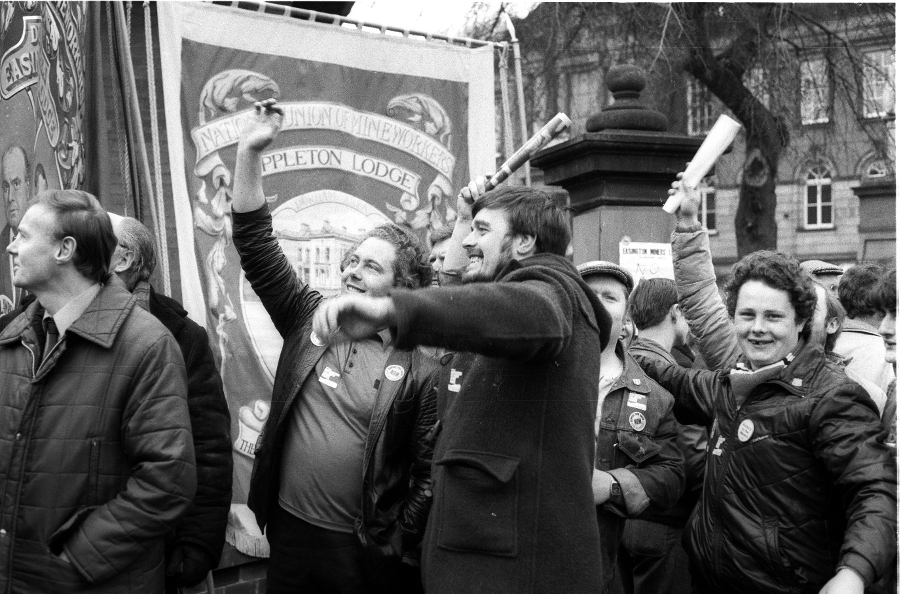
Image of Easington Miners in 1972

Over the last eighteen months or so, as I have read and watched accounts of the coal miners’ strike, I have reflected on my own time on the coalfields during that year. I was based in Durham and had been involved in research and teaching programmes in the mining communities, which continued up to and during the strike. I was quite heavily involved in evening meetings built around the “Campaign for Coal” initiated by the NUM which has largely been forgotten. Also, to me, many of the emphases seemed to be not quite right; they didn’t feel like it felt like back then. So much so that I found myself mouthing the words of Max Boyce: “and I was there!”

Issues like these led me to start once again rummaging through the many files and boxes I have kept marked “Miners’ Strike”, aiming to check out one or two of the historical facts and to check on some of the notebooks that I had kept. Then I made a very unexpected discovery. Inside one of the boxes, I discovered an envelope containing over 300 negatives of photographs that I had taken in the communities during 1984. I had completely forgotten about these to the extent that, when asked, I would say that I had not taken any photographs during that year. But obviously I had.

Most, but not all of these, were in Easington, where I had a base, and I was there In August when the unity of the strike in the colliery was being broken by one man, bused in from a village in the centre of the county. What followed was documented brilliantly by Keith Pattison who arrived there after the riot and saw the full extent of the reenforced police presence and the harsh crack-down. His photographs have become legendary.

Keith had been commissioned by the Side Gallery to photograph the events as they unfolded. At the time I felt that I was one photographer too many and that I should let the professional take over. I wrote some text for Keith’s exhibition, and this was published as a brochure (Easington 1984). More recently Keith has published his photographs in his wonderful book (No Redemption) with text from David Peace.

Keith and I became very good friends and, unsurprisingly I talked with him about the negatives. I thought they would bring back memories for him too. He scanned them into a digital format and told me that they were important and that I had to publish them as a book.  This was obviously nice to hear and encouraging, although I was daunted by the idea of a book.

I have been spending a lot of time looking though the photos, organising them by place and time and thinking how best I could write alongside them. Many years ago, I worked with another photographer, Nick Hedges, writing a text for the book Born to Work. (see Media – Huw Beynon). I wondered whether I could follow the style I used there. The situation is different of course because here we follow a story as it unfolded, drawing on my notebooks.  Also, as I took the photographs, the story is about me as well – me and what I was doing there. In spite of these differences, I felt that Born to Work was an example that I could follow, using text to draw out the wider issues that lay inside and behind the photographs them at the time while remembering how I felt at the time

Here, I thought that I could put together some themes that may be of interest

Young Men

From the very beginning I was struck by how young many of the coal miners active in the strike were.  This was made clear from the very beginning at the gates of the miners’ headquarters in Durham when a decision was being made strike or no strike. They talked to me about the strike in 1972, all of the stories that they had heard of it, and they were looking forward, with excitement, to being on strike. They were also looking forward to a full life, working underground, as miners. During the strike, those of them who were single would be without any means of support. They came to rely on “the kitchens” organised by the women of the villages for their daily meals.   

Image of Easington Miners in 1972

Rallies and Togetherness

Throughout the summer there were conferences at Sheffield, picketing in Nottinghamshire and then at the Orgreave coke works. Support groups were established in the coalfields and pit villages often with kitchens providing cooked meals. There were also rallies, meetings and events. All too many to summarise or easily capture. During July, while key national negotiations were taking place, there was a rally in Durham every weekend. These were important in maintaining morale across the coalfield and revealed the extent to which women have become centrally involved in the strike.

Breaking the Strike in the North

The national talks centred on the NCB’s idea of maintaining collieries in possession of “beneficial reserves”. This was rejected by the NUM leadership. What followed was a concerted attempt to break the strike. Through a national campaign beginning in North Derbyshire and extending to Scotland and then the North East, managers were contacting striking miners – most often those living away from the collieries and travelling to work by NCB coaches – encouraging them to go back to work, offering them protection from abuse.
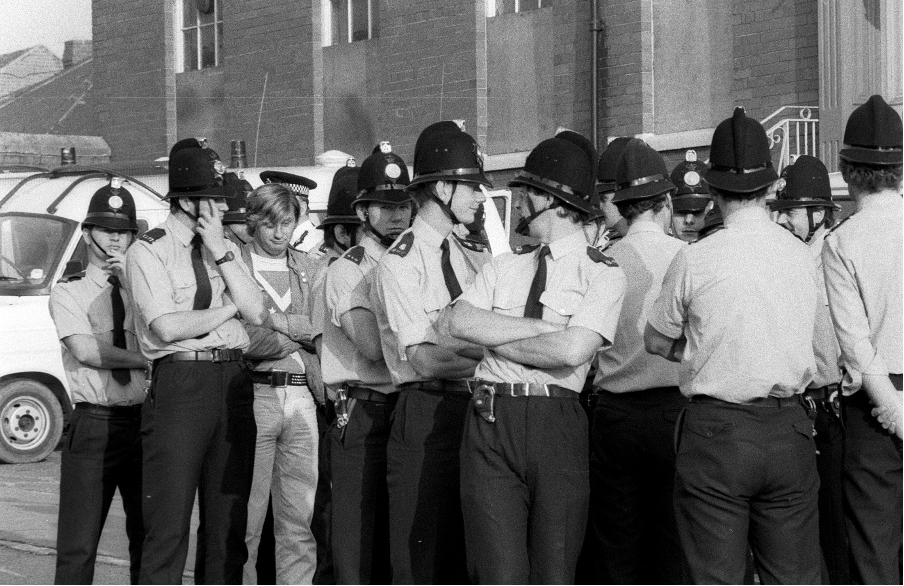
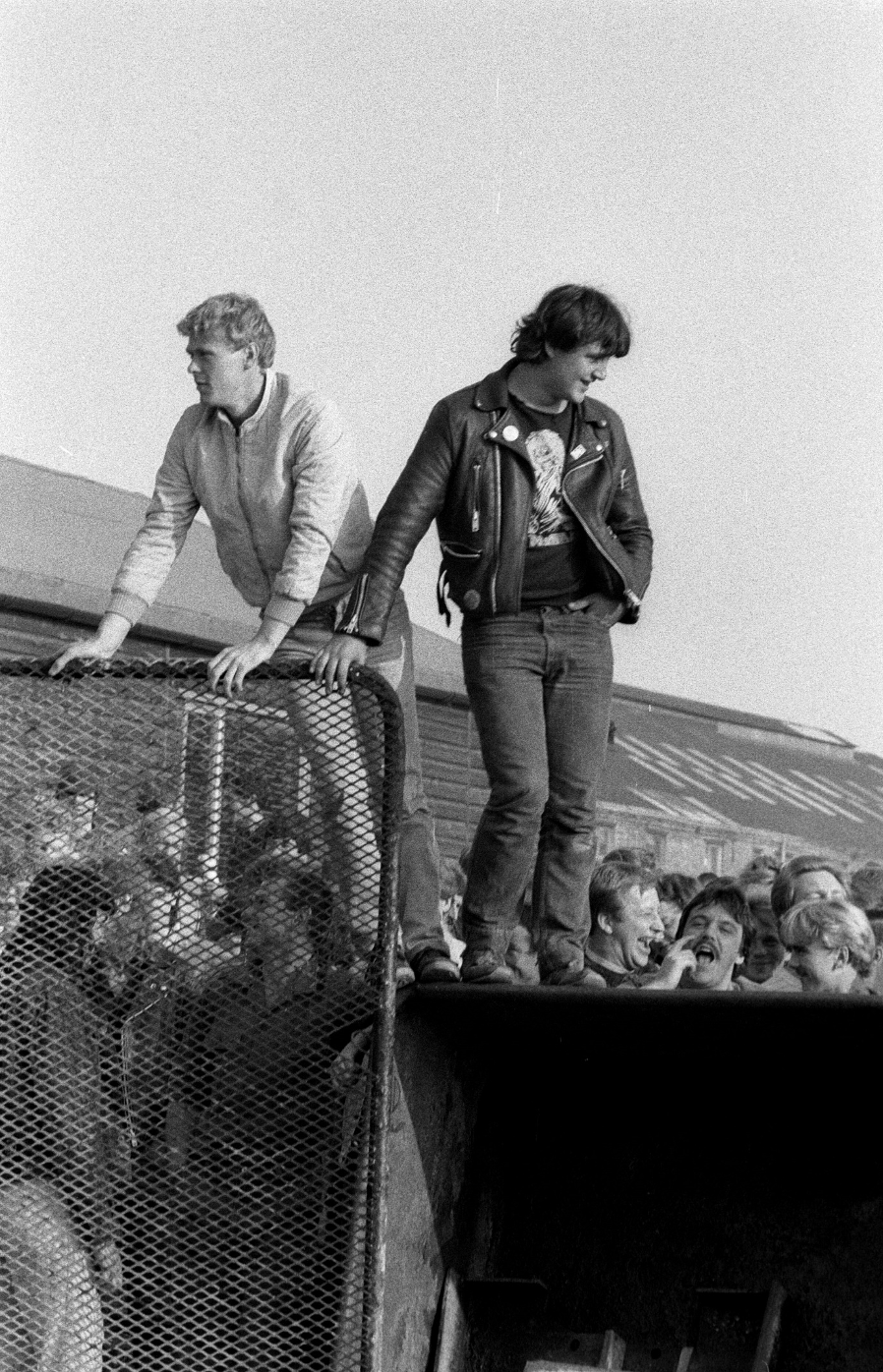
On the first Monday there was a relaxed feeling at the giant Easington colliery, with the lodge officials confident than no one would be breaking the strike. The calm was broken by the arrival of Gordon Parnaby with his car lights flashing. Someone was coming. One man – Paul Wilkinson – was on the bus. He had worked at the East Hetton colliery at Kelloe before moving to Easington after it closed. The Kelloe village was solidly behind the strike and Gorden explained; “he worked at the pit but he’s not a Kelloe man. He’s from Bowburn” and he was on the bus as it arrived in the village, now heading for the colliery at the coast.  All efforts were made to “defend our pit” with barricades and weight of numbers.  But Wilkinson was smuggled in through the back door and chaos ensued.
WISERD conversation – The Shadow of the Mine

In September I was asked by my friend Ian Rhys Jones at the research Institute WISERD to give a talk at their awayday about the bookThe Shadow of the Mine that I had written with Ray Hudson. The awayday became a virtual one, as a consequence of the virus, and we decided that rather than me speak for 40 minutes it would be more interesting to have a conversation about the book with my old friend Gareth Rees. This was recorded, and  as with the interview for Jacobin it extends some of the issues that we discussed in the book. Some people have found this interesting, the video is below and here’s the link to the event on the WISERD site

The good start

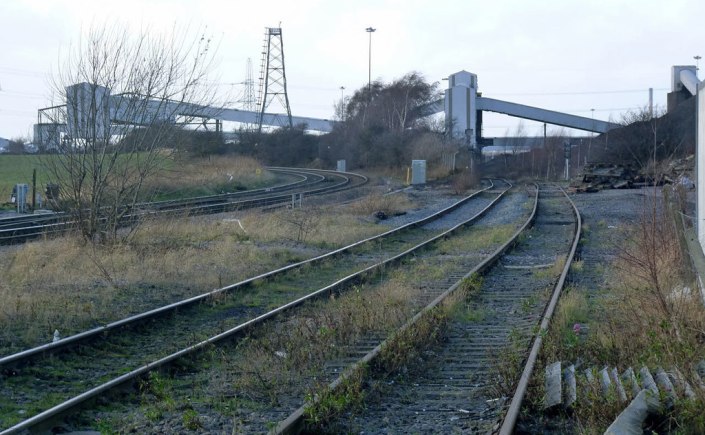
The railway into Kellingley Colliery, ©Alan Murray-Rust (CC BY-SA 2.0)

When Prime Minister Boris Johnson visited  Scotland he was asked to name the date when the UK would be free of fossil fuel.  He provided no answer, instead he talked of the “good start” provided by Mrs Thatcher’s closure of the coal mines, adding to the view that the dramatic closure of the British coal industry was driven by environmental necessity. Anything but as my friend Ray Hudson and I explore in our article in Tribune.  Thatcher’s main concern was the NUM. Our reliance on coal extended well beyond the closure of the mines. Today Britain is far less well prepared for a green future that countries (like Germany) that kept their pits open longer. 

When the last coal mine – Kellingley – closed in 2015 its shipments to the Drax power station were replaced with coal from Russian mines then adding to the half a trillion tonnes of imports made by the UK since 2001. Meanwhile on the coalfields the miners were, to all intents and purposes, pensioned off and their future left in the hands of the market and the beneficence of foreign inward investment. There was no strategic national plan for the coalfields or for a green economy!  Today, Johnson’s description of Britain as the “Saudi Arabia of wind” ignores the 34% of electricity generation that comes from burning gas in power stations.

All this is fanciful. The future may well lie in off-shore wind power but no British company has the expertise that Vestas and Siemens-Gamesa have accumulated over the last decades. In fact, the number of  companies based in the UK involved in off-shore wind  declined  by a third in the years between 2014 and 2019.   If there was indeed an early start it has clearly been wasted.  Johnson’s projection of the UK as a “world leader” in climate change has already been called out as a lie and it is clear that any future    green revolution it’s unlikely to be  driven by technologies ‘built better’ in the UK  on its old industrial regions.

No, Thatcher’s War on the Miners Wasn’t Good for Green PoliticsTribune 24/08/2021

Our book is now published…

Well our new book The Shadow of the Mine: Coal and the End of Industrial Britain is now published and also reviewed here and there:

“A hymn to working-class community and to men and women’s souls” Will Hutton, author of The State We’re In

“Refreshing and necessary … [The Shadow of the Mine] explains in loving, careful detail why working people’s relationship with Labour in former industrial communities … had become complex and ultimately soured.” Laura Pidcock, Red Pepper

“Their brilliant analysis of the decline of British coal mining, and its social and political effects, is required reading for those who would speak for this working class. It is in many ways a study in the lost world of British labourism.” David Edgerton, The Times Literary Supplement

The Shadow of the Mine reminds us why this spirit [of solidarity and collectivism] has lived on in the coalfields, in spite of people feeling a sense of political betrayal going back decades … enlightening.” The Guardian

“Their new book is essential reading for anyone who wants to dig deeper beyond vague generalizations about the “red wall” that have proliferated since December 2019…Beynon and Hudson encourage us to explore the long-term trends that have shaped the bewildering political situation we find ourselves in now” Charlotte Austin, Jacobin

“The Shadow of the Mine, is a moving account of 150 years of coalfield history, focusing on South Wales and Durham. It is not, however, a detached study of the past. By tracing the “deep story” of the marginalisation of Britain’s coalfields, it aims to understand the continuing exclusion of working-class people in deindustrialised areas from political and social life…if the current Labour leader wants to understand the challenges facing him, he would be far better reading The Shadow of the Mine than listening to PR companies telling him to wrap the party in a union jack.” Diarmaid Kelliher, Antipode Online

About the book

The Shadow of the Mine: Coal and the End of Industrial Britain, London, Verso, 2021, 402pp. ISBN -13:978-1-83976-156-0

This historical study of the coal industry tells of King Coal in its heyday and how communities of mining families created a unique and powerful social and political presence in areas like South Wales and Durham. In 1984 miners here were involved in a yearlong strike to save jobs  and to save coal mining. After the defeat the industry went into precipitous decline and this book outlines the social and political consequences that followed: often told in the words of the people themselves.

Coalfield landscapes (from The Shadow of the Mine)

There is an insert of glossy black photographs in the middle of our new book, The Shadow of the Mine. They illustrate thew story of the book: the overwhelming presence of mining, the strike to save to industry and the community response, the closures, the changing landscapes of decline sitting alongside the promises of new industry and a better way of life. The selection ends with the response from within – collective ownership of the mine at Tower and the continuation of the annual Big Meeting in Durham. We have brought them together here along with a couple of additions of our own:

Coalfield landscapes

Thanks to Kjell-Åke Andersson, Paul Reas and Keith Pattison

BBC Radio 4 Thinking Allowed – Coalmining & Luddism: What do we mean by progress?

A couple of weeks ago I was invited to talk with Laurie Taylor on his programme “Thinking Allowed” about our new book:  “The Shadow of the Mine: Coal and the End of Industrial Britain”.  Subsequently I  had lots of messages from old  friends pleased to know  that I was still alive and kicking! The interview concentrated on a time in this country when there were miners, and focused on the long story of  the mining districts of south Wales and Durham. It was this time that my old friends were pleased to be reminded of. If you are interested too it is available on the BBC website.

Classic book: The Enemy Within

I look back at Seamus Milne’s classic The Enemy Within: The Secret War Against The Miners. This article is available on the Red Pepper website.

The Enemy Within

The Enemy Within

How Black were our Valleys – Book Review

How Black were our Valleys

How Black were our Valleys

Debora Price and Natalie Butts-Thompson

“If you don’t stand for something you’ll fall for anything”
This is what one of the women interviewed for this book feels that she has learned from living in the South Wales valleys and growing up during the coal miners’ strike of 1984/85.  In this way, through interviews and extracts from documents, the book tells of how the strike remains a lived reality in the valley towns of South Wales. One man, a young striker in his teens in 1984, reflected  that “the violence that was inflicted on me and the violence I witnessed fellow miners receive will stay with me for the rest of my days”.

The book itself was inspired by a speeches and discussion at a social evening at the Newbridge Hotel held on the occasion of the funeral of Mrs Margaret Thatcher. This led two undergraduate students to document stories of the strike that  they felt deserved to be more widely heard.  In a very short time, they have collected the materials, and published them in this excellent collection. One of them (Natalie Butts-Thompson) was a teenager herself in 1984 and her personal account is particularly moving. In exploring the voices of the young people the book brings a perspective that has been silent in many accounts of the strike. More generally  it challenges many of the myths that still exist, and helps to explain its lasting significance of the strike in people’s lives.

Review for Amazon

Huw Beynon

The Miners’ Strike – A Personal Memoir by Kim Howells

It’s now 30 years since the epic struggle between the miners and a Conservative government led by Margaret Thatcher, a strike that lasted a bitter twelve months. Former Labour government minister Kim Howells was involved at the heart of the action, working for the National Union of Mineworkers in South Wales. In this deeply-felt memoir, he asks some challenging questions about the conduct, the strategy and the outcomes of the strike.

This memoir by Kim Howells was Broadcast on BBC One, 10:25PM Sun, 9 Mar 2014, and is available on the Iplayer until 11:24PM Sun, 16 Mar 2014.

strike-bbc